
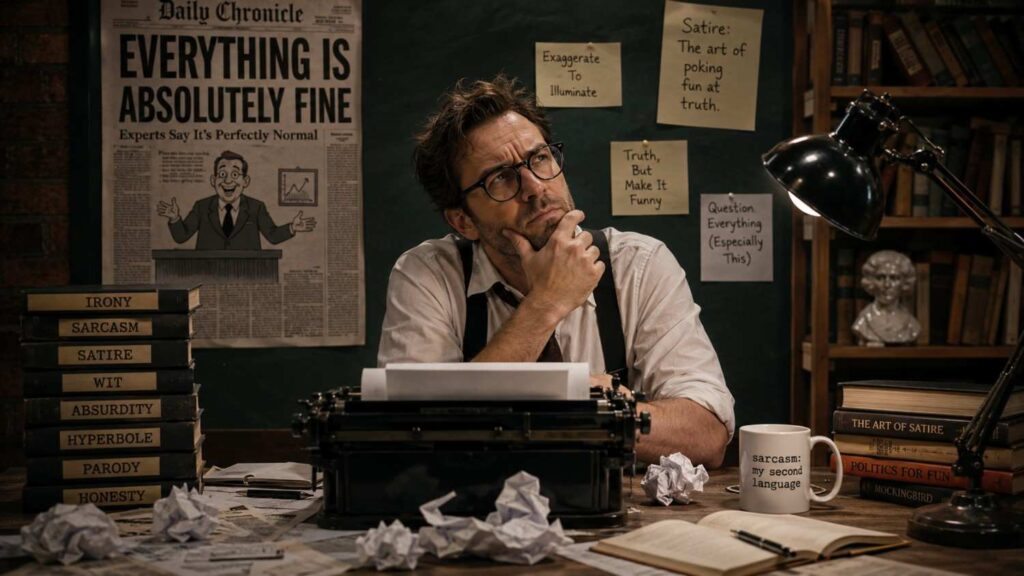
How to Write the Perfect Satirical Article
Learning How to Write the Perfect Satirical Article requires a mix of creativity, discipline, observation, and timing. Satire is not simply about saying something sarcastic or making fun of a person, trend, or institution. A well-written satirical article takes something real, exposes its weakness, and uses humor to help readers see the issue more clearly. That is why strong satire often feels funny and uncomfortable at the same time. It makes readers laugh, but it also leaves them thinking about the deeper criticism behind the joke.
In professional writing, satire is most effective when it has a clear purpose. The writer should know what they are criticizing, why it matters, and how humor will reveal the problem better than a direct opinion piece. A satirical article can focus on politics, business, education, technology, workplace culture, social media behavior, consumer habits, or almost any topic where human behavior creates contradiction. The key is to avoid writing random jokes and instead build the article around one strong idea.
In my experience, beginners often struggle because they try to be funny before they understand the target. The better approach is to start with a serious observation first. Ask yourself: What is the problem? Who benefits from it? Why is it absurd? What would happen if this behavior were pushed to an extreme? Once you answer those questions, the humor becomes easier to shape. This guide explains how to write satire step by step, from choosing a target to creating a strong headline, using satire techniques, avoiding misinformation, and editing the final draft for professional publication.
Understand What Satire Really Means
Before writing a satirical article, it is important to understand what satire actually does. Satire is a form of criticism that uses humor, irony, exaggeration, ridicule, or absurdity to expose a weakness in human behavior, social systems, public messaging, or cultural habits. It is different from ordinary comedy because comedy may exist only to entertain, while satire usually has a critical purpose. A joke can make people laugh and end there, but satire should create a second reaction: recognition. Readers should understand that the humor points toward something real.
This is why satire has been used for centuries in literature, journalism, theatre, cartoons, essays, and online humor. Writers use it when direct criticism may feel too plain, too aggressive, or too easy to ignore. Satire creates distance. It allows the reader to laugh at an exaggerated version of reality before realizing that the exaggeration is not completely fictional. That moment of recognition is what gives satire its power.
For beginners, the safest way to understand satire is to think of it as “serious criticism wearing a comic mask.” The mask makes the message more engaging, but the message still needs to be there. If the piece has jokes but no point, it is only comedy. If it has a point but no comic angle, it is closer to commentary or opinion writing. A perfect satirical article balances both sides: entertainment and insight.
Satire Is Criticism With a Comic Edge
Satire works because it turns criticism into something readers want to keep reading. Instead of saying, “This system is inefficient,” satire might show an office creating a committee to decide whether another committee should be formed. Instead of saying, “People care too much about online image,” satire might describe an influencer scheduling a candid photo shoot for authenticity. The humor makes the criticism easier to absorb, but the criticism remains the foundation of the piece.
A satirical article should always have a target. That target does not have to be one person. In fact, satire is often stronger when it criticizes a pattern, habit, institution, or belief system. For example, you can satirize corporate buzzwords, political doublespeak, consumer culture, academic pressure, productivity obsession, or social media trends. These targets are recognizable because readers have seen them in real life.
In my experience, the best satire begins with a clear sentence that explains the criticism privately to the writer. For example: “This article criticizes how companies talk about employee wellness while overworking employees.” Once that private sentence is clear, the writer can turn it into a comic premise. This prevents the article from becoming unfocused. The reader may not see that private sentence directly, but they should feel its presence through every joke, quote, and example.
Satire Is Not the Same as Parody
Satire and parody are often connected, but they are not exactly the same. Parody imitates the style, structure, voice, or recognizable features of something for comic effect. A parody might copy the tone of a luxury advertisement, a government announcement, a celebrity apology, or a news report. Satire may use parody as a tool, but its main purpose is criticism. In simple terms, parody imitates; satire critiques.
For example, if you write an article that sounds like a motivational LinkedIn post but exaggerates its empty phrases, you may be using parody. If that same article criticizes hustle culture, performative success, or shallow professional branding, it becomes satire. The imitation is the method, while the social criticism is the reason the piece exists.
Understanding this difference helps you write with more control. If your goal is only to mimic a style, then parody may be enough. But if your goal is to expose hypocrisy, challenge a trend, or make readers question a belief, then you need satire. Many strong satirical articles combine both. They borrow the format of a press release, news report, brand announcement, or advice column, then use that familiar format to reveal how ridiculous the real-world behavior has become.
Choose a Clear Satirical Target
A satirical article becomes much stronger when the target is specific. The target is the thing your article is criticizing. It can be a behavior, belief, institution, trend, industry habit, public message, or social contradiction. Without a clear target, satire becomes scattered. The jokes may still be funny, but readers may not understand what the article is trying to say. A clear target gives the writing direction and helps every section support the same idea.
When choosing a target, look for tension between what people say and what they actually do. Satire often lives in that gap. A company may say it values work-life balance while rewarding employees who answer emails at midnight. A politician may promise transparency while speaking in confusing slogans. A social media platform may promote connection while encouraging constant comparison. These contradictions are useful because they already contain comic potential.
The target should also be familiar enough for readers to recognize. If the issue is too obscure, the humor may not land. If it is too broad, the article may feel generic. Instead of satirizing “technology,” choose something more focused, such as people treating every small inconvenience as a productivity problem solved by another app. Instead of satirizing “business,” focus on corporate language that replaces clear communication with meaningless buzzwords. Specific targets create sharper satire.
| Satirical Target | Why It Works | Example Angle |
|---|---|---|
| Workplace Culture | Most readers recognize common office frustrations | “Company Introduces Meetings to Prepare for Future Meetings” |
| Social Media Trends | Familiar online behaviors make satire relatable | “Influencer Announces Digital Detox Through 27 Daily Posts” |
| Politics | Public policies and debates provide strong material for criticism | “Government Creates Committee to Study Why Committees Are Slow” |
| Consumer Culture | Highlights excessive spending or marketing tactics | “Luxury Water Brand Launches Premium Air Subscription” |
| Technology | Modern digital habits often contain natural contradictions | “AI Assistant Requests Human Help to Finish Its Work” |
| Education | School policies and academic pressure create recognizable scenarios | “Students Required to Take Test on Reducing Test Anxiety” |
Pick a Problem Readers Recognize
The most effective satire usually begins with a problem readers have already noticed but may not have fully questioned. This is why everyday experiences often make excellent satire topics. Meetings that could have been emails, customer service scripts that avoid responsibility, influencers selling authenticity, brands using emotional language to sell ordinary products, and schools creating pressure while promoting wellness are all examples of recognizable problems.
When readers recognize the situation, they become part of the joke. They do not need a long explanation because they already understand the world being exaggerated. This recognition creates trust between the writer and the reader. The reader feels that the writer is observing something real, not inventing a random complaint.
To find a strong problem, write down moments that feel slightly absurd in real life. Ask what people pretend is normal even though it is strange. Ask what phrases sound professional but hide a lack of meaning. Ask what behavior is rewarded even though everyone knows it creates problems. These questions help you identify topics with strong satirical potential. A perfect satirical article often starts with a small irritation and expands it into a larger comment about society, work, media, or culture.
Avoid Punching Down
Professional satire should be sharp, but it should not be careless. One of the most important rules is to avoid punching down. This means you should be careful about mocking people or groups who already have less power, protection, or social influence. Satire is usually stronger when it targets powerful systems, public behavior, hypocrisy, institutions, or harmful ideas instead of attacking vulnerable individuals.
This does not mean satire must be soft. Strong satire can be bold, uncomfortable, and direct. However, the direction of the criticism matters. If the joke depends on humiliating someone for their identity, personal hardship, disability, poverty, or lack of power, the writing can quickly become cruel rather than insightful. That weakens the article and can damage reader trust.
A useful editing question is: “Is this joke exposing a problem, or is it simply insulting someone?” If the joke exposes arrogance, hypocrisy, manipulation, dishonesty, or absurd behavior, it may have satirical value. If it only makes a person look small, it probably needs revision. In professional satirical article writing, the best target is often the system that creates the problem, not the person trapped inside it.
Build a Strong Satirical Angle
After choosing the target, the next step is to build the satirical angle. The angle is the central comic idea that turns your criticism into an article. It answers the question: “What exaggerated version of this problem will reveal the truth?” A strong angle gives the piece its shape. It helps you decide what the headline should say, what examples to include, what fake quotes to write, and how far the absurdity should go.
A weak angle often sounds like a direct complaint. For example, “People spend too much time in meetings” is a valid observation, but it is not yet satire. A stronger satirical angle might be: “Company replaces all work with meetings to improve productivity.” This version creates a fictional situation that exposes the real problem. The reader laughs because the premise is absurd, but the criticism is clear.
The best satirical angles usually exaggerate something that already exists. They do not come from nowhere. They take a real habit and push it one or two steps further. This is important because satire must stay connected to reality. If the angle becomes too random, the reader may miss the point. If it stays too realistic, the article may feel like ordinary criticism. The ideal angle sits between truth and absurdity.
Turn the Problem Into an Absurd Premise
An absurd premise is the engine of many satirical articles. It takes a real-world issue and exaggerates it into a fictional situation that reveals the problem more clearly. For example, if the real issue is that companies use vague language to avoid accountability, the absurd premise might be: “Company Announces Bold New Strategy to Continue Doing Exactly What It Was Already Doing.” The premise is funny because it sounds ridiculous, but it also feels believable.
To create an absurd premise, start with a real statement and then ask, “What would this look like if it were taken completely seriously?” If a brand says it cares about sustainability but produces excessive packaging, imagine a campaign celebrating waste as a premium feature. If people constantly chase productivity hacks, imagine an app that schedules time to schedule time. This method helps you transform observation into satire.
The absurd premise should be clear enough to explain in one sentence. If it takes too long to describe, the article may become confusing. A simple premise gives the reader something to hold onto while the jokes develop. In professional satire writing, clarity is not the enemy of humor. In fact, clear absurdity is often funnier than complicated cleverness.
Keep the Logic Consistent
Even when satire is absurd, it still needs internal logic. Once you create the fictional world of the article, the details should follow the rules of that world. If your premise is that a company has replaced actual work with meetings, then the quotes, examples, and conclusion should all support that idea. Employees might be praised for attending meetings about future meetings. Managers might measure productivity by calendar fullness. The company might launch a training program called “Advanced Sitting and Nodding.”
This consistency makes the article feel polished. Readers enjoy satire when the writer seems fully committed to the absurd world they have created. If the article jumps from one unrelated joke to another, the effect becomes weaker. A consistent premise allows humor to build gradually, with each paragraph adding another layer to the same central criticism.
A good way to test consistency is to ask whether each paragraph could be traced back to the main premise. If a joke is funny but unrelated, save it for another article. Strong satire is selective. It does not use every joke available. It uses the jokes that strengthen the central idea. This discipline separates professional satirical article writing from casual sarcasm.
Use Satire Techniques That Make the Article Work
Satire techniques are the tools that help a writer turn criticism into humor. These techniques include irony, exaggeration, absurdity, parody, juxtaposition, sarcasm, understatement, and mock seriousness. Each technique works differently, and the best choice depends on your topic. A satirical article about corporate language may work well with mock seriousness. A piece about social media trends may need exaggeration and irony. A satire essay about politics may rely on juxtaposition and absurd logic.
The goal is not to use every technique at once. Too many devices can make the writing feel crowded. Instead, choose two or three techniques that fit the central premise. If the article is written like a fake news report, you may use a serious journalistic tone to describe something ridiculous. If the piece is written as advice, you may exaggerate bad advice until readers understand the criticism. If the topic involves hypocrisy, irony may be the strongest tool.
In my experience, beginners often confuse sarcasm with satire. Sarcasm can be part of satire, but sarcasm alone is not enough. Sarcasm may sound bitter or dismissive if it does not have structure. Satire needs a larger design. It should guide the reader through a comic version of reality and lead them toward a clear takeaway.
Use Irony, Hyperbole, and Juxtaposition
Irony is one of the most useful techniques in satire because it creates contrast between appearance and reality. A company may claim to value honesty while hiding behind vague statements. A public figure may promote simplicity while creating unnecessary complexity. A satirical article can highlight that contradiction by making the false appearance sound even more polished and official.
Hyperbole, or exaggeration, pushes the issue to an extreme. This is useful because many real problems become easier to see when they are enlarged. If a workplace already has too many approval steps, satire might describe a new policy requiring approval to request approval. The exaggeration is funny because it extends a familiar problem into absurd territory.
Juxtaposition places two opposing ideas together to expose contradiction. For example, “Luxury Minimalism Course Now Available in 47-Piece Starter Kit” works because minimalism and excessive consumption clash. These techniques are powerful because they do not simply tell the reader what is wrong. They show the problem through contrast. When used carefully, irony in satire can make a point more effectively than direct criticism.
Use This Technique Table Before Drafting
A technique table can help you plan the article before writing the first draft. This is especially useful for beginners because satire can easily become unfocused if the writer starts with jokes instead of structure. Before drafting, identify the target, the criticism, the technique, and the expected reader reaction. This gives the article a stronger foundation and reduces the risk of writing unrelated punchlines.
| Satire Technique | Best Use | Example Idea |
|---|---|---|
| Irony | Showing hypocrisy | “Brand Celebrates Sustainability by Printing 8,000 Flyers About It” |
| Exaggeration | Making flaws obvious | “Manager Adds 14th Approval Step to Improve Speed” |
| Absurdity | Showing broken logic | “School Bans Books to Improve Reading Scores” |
| Juxtaposition | Creating contrast | “Luxury App Teaches Minimalism for $999” |
| Mock seriousness | Copying formal tone | “Official Report Confirms Everyone Is ‘Very Busy’” |
This table is not only useful for planning; it also helps with editing. After finishing the draft, compare each section with the technique you intended to use. If the article began as irony but turned into random sarcasm, revise it. If the exaggeration became too extreme to connect with reality, bring it closer to the original issue. Strong satire feels controlled, even when the subject is absurd.
Write the Article Structure Step by Step
A satirical article needs a clear structure so the reader can follow the joke and understand the criticism. While satire can appear spontaneous, the best satirical writing is usually carefully planned. A strong structure helps the humor build instead of appearing randomly. It also allows the article to move from setup to escalation to final punch in a natural way.
For most satirical articles, the structure begins with a headline that introduces the absurd premise. The opening paragraph then presents the fictional situation as if it were real. The body adds details, examples, fake quotes, consequences, and supporting scenes. The conclusion usually sharpens the main criticism or ends with a final twist. This structure works well because it imitates familiar article formats while slowly revealing the absurdity of the subject.
If you are learning how to write satire, think of the article as a controlled performance. You are not only writing jokes; you are maintaining a voice. The tone should remain consistent from beginning to end. If the article begins as a fake corporate announcement, keep that formal voice throughout. If it begins as a satirical advice column, keep the advice-column style consistent. Structure and tone work together to make the humor believable.
| Writing Stage | Purpose | Key Focus |
|---|---|---|
| Choose the Target | Decide what you want to criticize | Focus on a clear, recognizable issue |
| Create the Premise | Turn the issue into an exaggerated scenario | Keep the idea believable despite the absurdity |
| Write the Headline | Capture attention immediately | Make it sound realistic with a humorous twist |
| Build the Story | Support the premise with logical fake details | Maintain consistency throughout the article |
| Add Comic Elements | Increase humor without losing the message | Use irony, exaggeration, or absurdity naturally |
| Edit for Impact | Strengthen clarity and pacing | Remove weak jokes, repetition, and unnecessary explanations |
Start With a Sharp Satire Headline
The headline is one of the most important parts of a satirical article because it sets the reader’s expectation immediately. A strong satire headline sounds close enough to reality to be recognizable but strange enough to signal humor. It should identify the target, reveal the absurd premise, and invite the reader to continue. The best headlines often include a contradiction, exaggeration, or official-sounding phrase applied to something ridiculous.
For example, “Company Introduces Unlimited Vacation Policy Employees Are Too Afraid to Use” works because it captures a recognizable workplace contradiction. “Local Man Improves Mental Health by Downloading Seven More Productivity Apps” works because it exaggerates a modern habit. These headlines are not just funny phrases; they contain complete satirical ideas.
When writing a headline, avoid being too vague. A headline like “Modern Life Is Weird” may be true, but it is not specific enough. A better headline points to a clear behavior or system. Also avoid overloading the headline with too many jokes. One strong comic idea is usually better than three weak ones. For SEO purposes, if the article is instructional, the title should still include the main topic naturally, as in “How to Write the Perfect Satirical Article.”
Follow a Simple Drafting Formula
A simple drafting formula can make satirical article writing much easier. Start with the target, define the real problem, create the exaggerated premise, build supporting details, add quotes or examples, escalate the absurdity, and end with a final punch. This structure keeps the article focused while giving you enough room to be creative.
For example, if your target is corporate wellness culture, the real problem may be that companies talk about mental health without reducing workload. The exaggerated premise could be: “Company Launches Mandatory Relaxation Workshop During Employees’ Lunch Break.” The supporting details might include a manager explaining that relaxation is now a key performance indicator. The article could escalate by adding a wellness dashboard, mandatory breathing reports, and a reward for the employee who looks calmest while answering urgent emails.
This formula works because every part of the article supports the same criticism. It also helps prevent common beginner mistakes, such as adding unrelated jokes or changing the target halfway through. A professional satirical news article may look effortless, but underneath the humor is a clear structure that guides the reader from setup to recognition.
Make the Humor Clear Without Creating Misinformation
Satire often imitates real formats, such as news articles, press releases, interviews, product announcements, or public statements. This imitation can make satire more effective, but it also creates a risk: some readers may mistake the article for real information, especially when it is shared out of context on social media. For that reason, professional satire should be clear enough to entertain without misleading readers.
This does not mean you need to explain every joke. Over-explaining can ruin satire. However, there should be enough signals to show that the piece is satirical. These signals can include exaggerated details, impossible claims, comic names, absurd logic, a satire category label, or a publication context that makes the genre clear. The goal is to make the article funny and sharp without turning it into misinformation.
The difference between fake news and satire often comes down to intent and clarity. Fake news attempts to deceive. Satire uses fiction to make a point. However, readers may not always see the difference immediately. That is why responsible satirical writing requires careful choices, especially when dealing with public health, legal issues, elections, disasters, real accusations, or named individuals. A perfect satirical article should make the criticism clear without creating avoidable confusion.
Signal the Satirical Tone
Signaling the satirical tone helps readers understand how to interpret the article. This can be done through the headline, structure, wording, category label, and level of exaggeration. For example, a headline such as “Government Announces Plan to Fix Traffic by Asking Cars to Be More Considerate” clearly suggests absurdity. The reader understands that the piece is not a literal policy update.
Tone is especially important in the opening paragraph. If the article begins too realistically, some readers may mistake it for actual reporting. A slightly exaggerated first paragraph can help establish the satirical frame. This does not mean the writing should be silly. In fact, satire often works best when the tone is serious but the content is absurd. The contrast between formal language and ridiculous ideas creates humor.
If publishing on a website, use a clear category such as “Satire,” “Humor,” or “Opinion Satire.” This is useful for reader trust and content clarity. It also helps search engines and answer engines understand the context of the content. A professional satirical article can still be clever while being transparent about its genre.
Be Careful With Real Names and Serious Claims
Using real names in satire requires extra care. Satire can comment on public figures, companies, and institutions, but writers should avoid presenting false factual accusations as if they were verified facts. For example, mocking a politician’s speaking style is different from inventing a serious criminal accusation. The first may be commentary; the second may create legal and ethical risk.
If you use real names, make the satirical framing obvious. Avoid fake quotes that could be mistaken for real statements unless the context clearly shows they are fictional. Be especially cautious with topics involving crime, health, finance, safety, discrimination, or personal reputation. A joke can still have consequences if readers interpret it as a factual claim.
For safer writing, consider satirizing fictional characters, invented companies, or generalized public behavior. Instead of naming a specific CEO, you might write about “a productivity consultant who has not slept since 2018.” Instead of naming a real school, create “The Institute of Advanced Overthinking.” Fictionalization gives you more creative freedom while reducing confusion. Professional satire does not avoid risk by becoming dull; it manages risk by being clear, intentional, and fair.
Edit Your Satirical Article for Impact
Editing is where satire becomes sharper. The first draft often contains too many jokes, uneven pacing, or sections that explain the point too directly. A professional edit removes anything that weakens the central premise. It also improves timing, clarity, rhythm, and reader impact. Satire should feel effortless to read, but that usually requires careful revision.
When editing, focus on three things: the target, the tone, and the takeaway. The target should remain clear from beginning to end. The tone should not shift suddenly unless the shift is intentional. The takeaway should be understandable without being over-explained. If the reader finishes the article and knows exactly what was being criticized, the piece has done its job. If they only remember a few random jokes, the structure may need more work.
It is also useful to read the article aloud. Humor depends heavily on rhythm. A sentence that looks clever on the page may sound slow when spoken. Shorter sentences often improve punchlines, but longer formal sentences can work well when they imitate official language. The key is control. Every sentence should either build the premise, develop the joke, or sharpen the criticism.
Cut Weak Jokes and Repeated Points
One of the biggest improvements you can make during editing is removing weak jokes. Many writers feel tempted to keep every funny line, but not every joke belongs in the final article. If a joke does not support the main premise, it can distract the reader. If two jokes make the same point, keep the stronger one. Satire becomes more powerful when it is focused.
Repeated points are another common problem. A satirical article may begin by criticizing corporate buzzwords, then repeat the same idea in five different ways without adding anything new. Instead, each paragraph should escalate or deepen the joke. The article should move forward. If paragraph three and paragraph six do the same job, one of them can usually be cut or rewritten.
When editing, ask yourself whether each joke reveals something new about the target. A strong joke may expose hypocrisy, show absurd consequences, imitate a recognizable voice, or add a surprising detail. A weak joke may only repeat the obvious. Professional satire is not about having the most jokes. It is about having the right jokes in the right order.
Check the Final Reader Takeaway
A perfect satirical article should leave readers with a clear takeaway. They should understand what the article was criticizing and why the criticism matters. This does not mean the conclusion should become a serious lecture. In fact, ending with a direct explanation can weaken the satire. Instead, the final lines should reinforce the core idea through one last sharp image, quote, or absurd detail.
For example, if the article criticizes productivity culture, the ending might show the main character scheduling a recovery session from the stress of managing recovery sessions. This ending remains funny while reminding readers of the deeper point. The reader understands the criticism without being told directly.
Before publishing, summarize the article in one sentence. If you cannot explain the point clearly, the article may need revision. Then ask whether the final paragraph supports that point. Many satirical articles lose energy near the end because they run out of direction. A strong ending should feel inevitable but still surprising. It should make the reader think, “That is ridiculous,” and then immediately realize, “That is also very close to real life.”
Quick Answer About How to Write the Perfect Satirical Article
To write the perfect satirical article, start with a real issue that deserves criticism, then turn that issue into a humorous, exaggerated, or ironic premise. The goal is not just to make readers laugh; the goal is to make them notice a truth they may have ignored. A strong satirical article usually has a sharp headline, a clear target, a consistent tone, believable exaggeration, and a conclusion that reinforces the main point. Satire works best when the humor supports the message instead of distracting from it. Whether you are writing a blog post, a satire essay, or a satirical news article, the strongest pieces combine wit, structure, social commentary, and careful editing.
Frequently Asked Questions
Satire can feel difficult at first because it asks the writer to do two things at the same time: entertain the reader and make a serious point. Many beginners wonder how far they can exaggerate, how direct they should be, and how to avoid crossing ethical or legal lines. These questions are important because satire depends on reader understanding. If the article is too obvious, it may feel flat. If it is too subtle, readers may miss the joke or mistake the piece for real information.
This FAQ section answers common questions about How to Write the Perfect Satirical Article in a practical way. The answers are designed for students, bloggers, content writers, humor writers, and website owners who want to publish satire professionally. Use these responses as a quick reference before drafting, editing, or publishing your own satirical content. They also support AEO and GEO optimization because they answer real search-style questions in a clear, direct format.
What makes a good satirical article?
A good satirical article has a clear target, a strong comic premise, consistent tone, and a meaningful point behind the humor. It should not feel like a random collection of jokes. Every paragraph should support the same criticism, whether the topic is workplace culture, politics, social media, education, business, or consumer behavior. The reader should understand both what is funny and what is being exposed.
The best satire usually feels slightly exaggerated but still connected to reality. If the piece is too realistic, it may read like ordinary commentary. If it is too absurd, the message may become unclear. A good satirical article sits between those two extremes. It makes readers laugh because the premise is ridiculous, but it also makes them uncomfortable because the truth behind it is recognizable.
How do you start a satirical article?
Start a satirical article by identifying a real problem, contradiction, or behavior that deserves criticism. Then turn that issue into an exaggerated premise. For example, if you want to criticize how companies use too much jargon, you could write a fake announcement about a business launching a new department dedicated to making simple ideas impossible to understand. This gives the article a clear comic direction.
After you have the premise, write a headline that captures the idea quickly. The opening paragraph should introduce the fictional situation in a confident tone, as if it were real. This serious delivery makes the absurdity funnier. Avoid starting with a long explanation of what satire is. Begin with the world of the joke, then let the details reveal the criticism naturally.
What are the main satire techniques?
The main satire techniques include irony, exaggeration, absurdity, parody, juxtaposition, sarcasm, understatement, and mock seriousness. Irony highlights the gap between what people say and what they do. Exaggeration pushes a real issue to an extreme. Parody imitates a familiar style or format. Juxtaposition places contrasting ideas side by side to expose contradiction.
The best technique depends on your topic. If you are criticizing corporate culture, mock seriousness and exaggerated business language may work well. If you are writing about social media, irony and absurdity may be more effective. You do not need to use every technique in one article. In fact, using too many techniques can make the piece feel unfocused. Choose the devices that strengthen your central premise.
Can satire be mistaken for fake news?
Yes, satire can be mistaken for fake news, especially when readers see only a headline, screenshot, or short excerpt without context. This is common on social media, where content is often shared quickly. Satire and fake news may both use fictional claims, but their purpose is different. Fake news is designed to deceive, while satire uses fiction to criticize, entertain, or expose a truth.
To reduce confusion, make the satirical tone clear through exaggeration, absurdity, category labels, and context. If the article uses real names or serious topics, be even more careful. A professional satire writer should not rely on reader confusion as the main joke. The humor should come from the criticism and comic structure, not from tricking people into believing something false.
How do you write satire without being offensive?
To write satire without being unnecessarily offensive, focus your criticism on ideas, systems, hypocrisy, public behavior, or powerful institutions rather than vulnerable individuals. This is often called punching up instead of punching down. Satire can be sharp and bold, but it should have a purpose beyond insult. A joke that only humiliates someone may not be satire; it may simply be cruelty.
Before publishing, ask whether the article exposes a meaningful problem. Also ask who is being targeted and why. If the humor depends on stereotypes, personal hardship, identity, or private suffering, revise it. Strong satire does not need cheap attacks. It becomes more effective when the criticism is intelligent, specific, and directed at behavior or systems that deserve examination.
Is satire legal?
Satire may be legally protected in many situations, especially when it is clearly commentary, criticism, parody, or opinion. However, legal protection depends on the country, context, topic, and how the content is written. Writers should be careful when using real names, brands, public figures, or serious allegations. A satirical tone does not automatically protect every statement from legal risk.
As a practical rule, avoid presenting false factual claims as verified truth. Make the satirical context clear, especially if the article discusses crime, health, finance, public safety, or personal reputation. If your satire involves a real person or organization and could damage reputation, it is wise to get legal advice before publishing. Professional satire should be creative, but it should also be responsible.
Conclusion
Writing satire is a skill that improves with observation, practice, and careful editing. The most important lesson is that satire should begin with a clear point, not just a desire to be funny. When you understand the problem you want to criticize, you can choose a stronger angle, write a sharper headline, use better satire techniques, and build an article that feels both entertaining and meaningful. That is the real foundation of How to Write the Perfect Satirical Article.
A strong satirical article should have a recognizable target, an exaggerated premise, consistent internal logic, and a clear reader takeaway. It should use humor to reveal truth, not hide confusion. It should be bold without being careless, funny without being empty, and critical without becoming unnecessarily cruel. Whether you are writing for a blog, school assignment, publication, or creative project, the same principle applies: the joke should serve the message.
If you are just starting, begin with everyday contradictions. Look at what people say versus what they do. Notice phrases that sound professional but mean very little. Watch for systems that create the problems they claim to solve. Those small observations often become the best satire topics. With practice, you will learn how to turn them into articles that readers remember.