
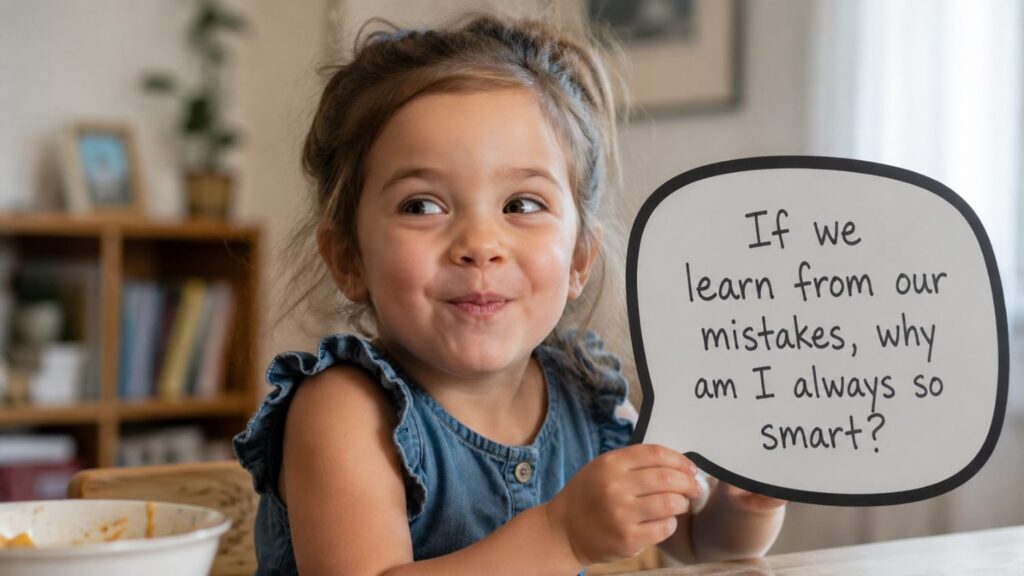
The Funniest Things Kids Say: Hilarious Kid Logic We Never Forget
Anyone who spends enough time around children eventually hears a sentence that deserves to be written down immediately. Children can turn a normal breakfast into a philosophical discussion, explain adult behavior with startling confidence, or ask a question that makes every person in the room stop and think. Their comments can be clever, confusing, brutally honest, imaginative, and unexpectedly accurate, sometimes all at the same time.
That is why The Funniest Things Kids Say remain so memorable long after the moment has passed. Adults normally filter what they say through experience, social expectations, and a large vocabulary. Children are still developing those filters. They often describe what they see directly, interpret language according to its most obvious meaning, and create explanations based on the limited but rapidly expanding information they already have.
The result is a form of childhood humor that rarely needs a punchline. The examples in this article are original, illustrative lines inspired by everyday situations rather than quotations attributed to specific real children. Along the way, we will explore why kids say such funny things, how language and imagination contribute to kid logic, how adults can respond positively, and how families can preserve those priceless conversations before they disappear from memory.
Why Kid Logic Creates So Many Unforgettable Moments
Kid logic is funny because children are doing serious intellectual work with information that is still incomplete. They are constantly learning what words mean, how social rules work, why adults behave in particular ways, and how one event relates to another. When a child reaches a conclusion that seems unusual to an adult, that conclusion often follows a surprisingly understandable chain of reasoning from the child’s point of view.
Language development plays an important role in these moments. Young children gradually expand their vocabulary, improve sentence structure, learn how conversations work, and begin to understand expressions that cannot be interpreted word for word. Organizations such as the American Speech-Language-Hearing Association provide communication milestones that illustrate how speech and language skills develop throughout early childhood. Those changing abilities help explain why the way children describe the world can change dramatically within only a few years.
What makes these conversations especially memorable is their originality. Adults have heard familiar expressions thousands of times, so we rarely question them. Children often encounter those same phrases without that background knowledge. They may take them literally, replace an unfamiliar word with one that seems more logical, or build a creative explanation using concepts they already understand. That combination of developing language and fresh observation creates many of the funny things kids say that families remember for years.
Children Often Interpret Adult Language Literally
Adults use figurative expressions so frequently that we barely notice them. We tell someone to “keep an eye on” a sibling, say that a person “lost their mind,” or complain that we are “starving” when we simply mean we are hungry. A young child may not yet understand that these expressions have meanings beyond the individual words, so the most literal interpretation can seem completely reasonable.
Imagine telling a child, “Keep an eye on your brother while I answer the phone.” A serious response might be, “Which eye should I use?” Similarly, after overhearing that someone had “lost their mind,” a child might wonder whether anyone had checked under the couch. The humor comes from the gap between adult intention and the child’s entirely logical interpretation of the sentence.
These moments also remind adults how strange everyday language can be. Many common expressions make very little sense when considered literally. Rather than dismissing the child’s interpretation, parents can use it as an opportunity to explain how language works. A brief explanation of the expression can expand vocabulary while still allowing everyone to enjoy the unexpected kid logic that made the moment funny.
Children Build Explanations From What They Already Know
When children encounter something unfamiliar, they naturally compare it with information they already understand. They may not know the scientific explanation for fog, why someone has lost their hair, or how an elevator works, but they still want an answer. The result is often an imaginative theory that combines observation with familiar concepts in a surprisingly organized way.
A child seeing fog for the first time might announce, “The clouds came downstairs today.” Another child noticing a bald adult might quietly ask whether the person’s haircut “used all the hair.” These explanations are incorrect in a technical sense, but they demonstrate a real attempt to connect new experiences with recognizable ideas such as clouds, stairs, haircuts, and familiar cause-and-effect relationships.
This pattern is one reason childhood humor can feel so creative. Adults already know the conventional explanations, so we rarely need to invent our own. Children have more gaps to fill, and they fill them using imagination, language, and observation. Their explanations can therefore reveal how they are organizing information while giving parents an entertaining glimpse into the reasoning that produced the final answer.
| Kid Logic Pattern | What Children Often Do | Example of the Humor | Related Concept |
|---|---|---|---|
| Literal Interpretation | Take familiar phrases exactly as they sound | “Which eye should I use?” after “Keep an eye on your brother.” | Literal thinking |
| Invented Vocabulary | Create new words from familiar patterns | Calling a vacuum cleaner a “floor eater” | Language development |
| Unexpected Comparisons | Explain unfamiliar things through familiar objects | “The clouds came downstairs today.” | Imagination |
| Honest Observations | Describe people and situations without adult social filtering | “You look really pretty when you’re far away.” | Childhood humor |
| Rule-Based Logic | Apply family rules consistently, even when adults do not | “You said no yelling while you were yelling.” | Kid logic |
| Imaginative Explanations | Build explanations using pretend-play ideas | “My invisible dinosaur is charging his phone.” | Pretend play |
| Everyday Reframing | Give ordinary experiences a completely different perspective | “Recess is the subject I’m best at.” | Child perspective |
Funny Things Kids Say About Parents and Family
Family members are usually the first people children observe closely, which means parents, grandparents, and siblings become a constant source of material for funny comments. Children notice routines that adults assume are invisible. They hear what parents say, remember household rules, compare how different family members behave, and sometimes comment on those differences with an honesty that can be both amusing and slightly uncomfortable.
Many funny parenting moments come from the fact that children have fewer social filters than adults. A grown person may notice that someone looks tired, has gained weight, wears unusual clothes, or cooks a meal differently than expected but decide not to mention it. A child may simply say what they see. The observation is not always intended as criticism; it may be a straightforward description delivered without awareness of adult sensitivities.
Collections of the funniest things kids said often highlight the same mix of honesty, unexpected observations, and childlike logic that makes family conversations so memorable.
Family life also exposes children to contradiction. Parents regularly tell children not to shout while shouting across the house, not to eat sweets before dinner while sampling dessert, or to put phones away while checking a message. Children often remember rules with impressive precision and may be quick to point out when adults do not follow their own instructions. Those observations create some of the hilarious things children say because the child is not merely being funny—the child may actually have a strong case.
Kids Can Be Uncomfortably Honest
Children often describe people and situations without the careful wording adults use to protect feelings. A child may intend to give a genuine compliment and still produce a sentence that leaves the recipient unsure whether to laugh. This directness is one of the most recognizable features of funny family conversations because adults understand the social meaning that the child may not yet recognize.
Illustrative examples might include, “Mom, you look really pretty when you’re far away,” or, “Dad, you’re strong for someone who gets tired walking upstairs.” A grandparent might hear, “You don’t look old, only your hands do,” while a parent serving dinner could receive the review, “This tastes good when I’m very hungry.” The child may believe each statement is completely positive.
Adults can usually handle these comments best by considering intention as well as wording. A young child may be making a neutral observation rather than deliberately insulting anyone. When appropriate, parents can gently explain that certain descriptions may hurt another person’s feelings while still appreciating the innocence behind the original comment. That approach helps children develop social awareness without turning every unexpectedly honest observation into a reprimand.
Children Notice Adult Contradictions
Parents sometimes underestimate how closely children listen to household rules. A child who appears distracted may remember exactly what was said several days earlier, especially when that statement can later be used during an argument about dessert, bedtime, screen time, or chores. This ability creates some of the strongest examples of funny kid logic because children can apply adult rules with remarkable consistency.
Suppose a parent announces, “We never eat dessert before dinner,” only to be caught sampling a piece of chocolate while cooking. A child may immediately ask, “Then why are you eating mine?” Similarly, a parent who asks everyone to speak quietly in the car may hear, “You said communication is important,” from the back seat. The wording may be funny, but the reasoning is difficult to dispute.
These moments can be useful reminders that children learn from behavior as well as instructions. They compare what adults say with what adults actually do. When the two do not match, children may notice immediately. Their observations can be humorous, but they also encourage parents to explain exceptions clearly and model the same standards they expect children to follow whenever possible.
Related Articles
Funny Things Toddlers Say About Food, School, and Bedtime
Everyday routines produce some of the richest material for funny things toddlers say because children encounter the same situations repeatedly while their understanding changes. Meals introduce unfamiliar tastes and strange food names. School brings new rules, people, routines, and vocabulary. Bedtime raises complicated questions about sleep, darkness, tomorrow, dreams, and why adults are allowed to stay awake after children have gone to bed.
These environments are especially interesting because children already feel confident enough to express strong opinions about them. A child does not need to understand nutrition to announce that peas are suspicious. A preschooler does not need to understand educational planning to decide that recess is the most important subject. At bedtime, even a normally sleepy child may suddenly have questions about planets, fish, death, dinosaurs, or the beginning of time.
The humor usually comes from the collision between familiar routines and unexpected reasoning. Adults see dinner, school, and bedtime as ordinary parts of the day. Children can view them as complex systems that deserve explanation and negotiation. Their comments provide a fresh perspective on routines that adults barely notice anymore, which is why these topics repeatedly appear in collections of funny kid quotes, parenting stories, and family memories.
| Situation | Why It Becomes Funny | Illustrative Kid Quote |
|---|---|---|
| Food | Children rename unfamiliar shapes and flavors | “Broccoli is a tree that fits on my fork.” |
| School | Rules are applied in unexpected ways | “Teacher said no running, so I ran slowly.” |
| Bedtime | Children suddenly develop urgent questions | “I can’t sleep because tomorrow isn’t here yet.” |
| Family | Adult behavior is compared with adult rules | “You said no yelling while you were yelling.” |
| Vocabulary | Children construct words from familiar concepts | “Is the person who fixes teeth a tooth doctor?” |
Food Inspires Excellent Kid Commentary
Food gives children an enormous range of things to describe. Meals involve color, texture, temperature, smell, shape, unfamiliar names, family rules, and personal preference. Because children are still developing the vocabulary to explain those experiences precisely, their descriptions can be wonderfully inventive and sometimes more memorable than the official name of the food.
A child might announce, “I like carrots, but not when they taste like carrots,” or ask, “Why is it called fast food if we had to wait?” Broccoli may become “tiny trees,” mashed potatoes may be “cloud food,” and a suspicious casserole might simply be described as “everything touching everything.” These lines sound humorous because they capture the child’s reaction with unexpected accuracy.
Parents can encourage this kind of descriptive language without turning dinner into a vocabulary lesson. Instead of asking only whether a child likes a food, try asking what it reminds them of, how they would describe the texture, or what name they would give it. The answers may reveal useful information about preferences while generating some memorable toddler sayings along the way.
School Creates an Entire New Vocabulary
Starting preschool or school introduces children to a new social environment with unfamiliar roles and terminology. Teachers, classmates, assemblies, subjects, homework, recess, lunch periods, and classroom rules all need to be understood. Children often explain these experiences using the family structures and vocabulary they already know, which can produce surprisingly entertaining interpretations.
A young child might report, “My teacher has 24 kids, but none of them live at her house,” because the child’s main experience of an adult caring for children comes from family life. Another may proudly announce, “Recess is the subject I’m best at.” A classroom rule such as “walk inside” may become, “We aren’t allowed to run unless we’re outside enough.”
These hilarious kid quotes often tell parents more than a simple “school was fine” ever could. The way a child describes a classroom can reveal what they noticed, what confused them, and what mattered most during the day. Asking open questions such as “What was the strangest thing that happened?” often leads to richer conversations than asking only whether school was good.
Bedtime Produces Sudden Philosophers
Bedtime has a remarkable ability to produce questions that apparently could not be asked at any earlier point in the day. As soon as the lights are dimmed, children may become deeply interested in astronomy, biology, family history, dreams, time, and subjects that require far more explanation than anyone expected to provide before sleep.
A child might ask, “If I close my eyes, how will I know when I’m asleep?” Another may want to know whether fish understand that they are wet or whether the moon follows every car at the same time. These questions are funny partly because of their timing, but many are also thoughtful attempts to understand concepts adults take for granted.
Parents do not need to produce perfect scientific answers to every bedtime question. Sometimes a short response followed by “What do you think?” can create a more interesting conversation. It also allows children to explain their own theories, which may become the most memorable part of the exchange. Just remember that one philosophical question can easily become ten when bedtime negotiation is involved.
Why Do Kids Say Such Funny Things?
There is no single reason children produce so many memorable comments. Their humor can emerge from language development, imagination, imitation, experimentation, literal interpretation, emotional expression, and an incomplete understanding of social conventions. These processes overlap, which is why a single sentence can reveal several different parts of childhood development at once.
Young children are constantly testing how communication works. They listen to adults, copy expressions, rearrange words, ask questions, and experiment with ways to describe experiences. When they do not know a word, they may invent one. When an explanation seems incomplete, they may create their own. When adults respond with laughter or interest, children also begin learning how language affects other people.
Developmental resources from organizations such as ASHA, the CDC, HealthyChildren.org, Harvard’s Center on the Developing Child, and UNICEF emphasize the importance of communication, play, interaction, and responsive relationships in early childhood. These sources do not exist to explain jokes, but they help provide context for why children’s language and thinking can change so quickly. The same growth that supports communication also creates many of the unexpected observations adults recognize as childhood humor.
Their Language Is Still Growing
Young children learn vocabulary at an impressive pace, but there will always be moments when the word they need is missing. Instead of ending the conversation, many children build a new expression from language they already know. This process can create descriptions that are unusual but surprisingly effective at communicating exactly what they mean.
A vacuum cleaner might become a “floor eater,” a construction worker could be “a building fixer,” and a mail carrier might be “the letter bringer.” A dentist may be called a “tooth doctor,” while a thermometer becomes a “temperature stick.” These terms may not be conventional, yet an adult can often understand the meaning immediately because the child’s internal logic is clear.
ASHA provides communication milestones covering different stages of early childhood and notes that children develop at individual rates. Funny vocabulary should therefore be enjoyed in context rather than used as a developmental test. If a parent has concerns about a child’s speech, language, hearing, or ability to communicate, reliable milestone information and professional guidance are more appropriate than comparisons with anecdotes from other families.
Imagination Changes the Rules
Children do not always divide reality and imagination as rigidly as adults do during play. A sofa can become a pirate ship, a cardboard box can become a rocket, and an invisible dinosaur may require its own seat at the table. Within that imagined world, statements that sound absurd to adults can follow perfectly consistent rules.
A parent may hear, “Don’t sit there because my dragon is sleeping,” or, “I can’t clean my room because the floor is lava.” These comments may be playful excuses, serious imaginative declarations, or some combination of both. The important point is that pretend play gives children a space to experiment with language, relationships, roles, rules, and storytelling.
HealthyChildren.org describes play as supporting multiple areas of development, including language, thinking, social-emotional skills, and self-regulation. Parents can support imaginative conversation by joining the story without taking over. Asking, “What does your dragon eat?” may lead to a detailed explanation that is more creative and entertaining than anything an adult could have invented.
How to Save Funny Kid Quotes Before You Forget Them
One of the frustrating things about memorable child conversations is how quickly they disappear from memory. In the moment, a quote can seem impossible to forget. A few days later, the parent may remember only that something hilarious happened in the kitchen while making breakfast. Without a simple system, many of the best family stories slowly become vague.
Preserving funny kid quotes does not require an elaborate scrapbook or professional memory-keeping system. The best method is usually the one that is convenient enough to use immediately. A phone note, shared family document, small notebook, voice memo, private photo caption, or dedicated quote journal can all work. The key is reducing the amount of effort required between hearing the comment and recording it.
Collections of funny kid quotes from parents can also show how these unexpected comments become memorable family moments.
It is also useful to capture more than the sentence itself. A quote often becomes much funnier when you remember what the child was doing, how old they were, who was present, and what happened immediately before the comment. Recording context turns a disconnected line into a complete family story. Over time, those small entries create a valuable record of changing vocabulary, personality, interests, imagination, and family life.
Start a Family Quote Journal
A family quote journal can be as simple or detailed as you want. Some parents prefer a small notebook kept in the kitchen, while others use a private note on their phone because it is always nearby. Digital documents are especially convenient if several family members want to contribute sayings from the same children.
For each entry, record the child’s exact words, approximate age, date, and situation. If the wording included a funny mispronunciation, unusual grammar, or invented word, write it exactly as it was said rather than correcting it. Those details often explain why the original comment was so memorable and preserve the child’s natural voice more effectively.
Over time, you can organize favorite entries into categories such as school, food, grandparents, holidays, bedtime, or sibling conversations. Families sometimes include selected quotes in birthday letters, photo albums, graduation books, or annual memory collections. The purpose is not to document every sentence a child says but to keep the moments that immediately feel worth remembering.
Record the Context, Not Just the Punchline
A quote without context may still be amusing, but the full story often makes it far more meaningful. Imagine saving only the sentence, “The moon is following our car.” Years later, you may remember the idea but forget the excitement with which it was said or the nighttime journey that inspired it.
A fuller entry could note that the child noticed the moon through several turns during a drive home and became convinced it had chosen the family car to follow. That small amount of detail preserves the scene, not just the wording. Context also helps other relatives understand why a particular quote became part of family history.
When saving or sharing stories, consider the child’s privacy as well. A funny comment does not automatically need to become public content. If you post a quote online, avoid unnecessary information such as a child’s full name, school, exact location, private medical information, or embarrassing personal details. Preserving family memories and respecting children’s privacy can easily happen at the same time.
| Memory-Keeping Element | What to Record | Why It Matters Later | Best Format |
|---|---|---|---|
| Exact Words | The child’s original wording | Preserves the authentic humor and personality | Phone note or journal |
| Age | Child’s age when the quote was said | Provides developmental and family context | Journal entry |
| Date | When the moment happened | Makes memories easier to organize chronologically | Digital note or calendar |
| Situation | What was happening when the child said it | Explains why the comment was funny | Family journal |
| Child’s Reasoning | What the child thought or meant | Preserves the logic behind the statement | Written memory |
| Family Context | Who was present and what was happening | Turns a short quote into a complete family story | Memory book |
| Privacy Details | Avoid unnecessary names, school details, or exact locations when sharing publicly | Helps protect the child’s privacy | Private journal or edited public post |
How Should Adults Respond When Children Say Something Hilarious?
A funny comment from a child is more than entertainment. It is often an invitation to continue a conversation. Children learn communication partly through responsive interaction, which means the way an adult reacts can encourage curiosity, explanation, storytelling, and further language use. A warm response can therefore preserve the humor while also supporting meaningful connection.
Harvard’s Center on the Developing Child describes responsive back-and-forth interaction as “serve and return,” emphasizing the importance of adults responding to children’s communication and interests. UNICEF also encourages active communication with young children. In practice, that may be as simple as listening carefully, acknowledging the comment, asking a follow-up question, and giving the child time to explain.
Adults should also pay attention to whether laughter might embarrass the child. A four-year-old who invents a funny word may be delighted that everyone laughed, while another child may believe they are being mocked. The goal is to enjoy the humor without making children reluctant to speak. Responding with curiosity and warmth usually creates better conversations than immediately correcting every unusual expression.
Laugh With the Child, Not at the Child
Laughter can be a positive part of family communication when the child feels included rather than targeted. If a child makes a funny observation, smiling and responding warmly can show that the conversation is enjoyable. The difference lies in whether the child understands that everyone is enjoying the idea rather than treating the child as the joke.
An adult might say, “That is such an interesting way to describe it,” and then ask, “What made you think of that?” This validates the child’s participation and encourages an explanation. The follow-up answer may reveal a surprisingly thoughtful chain of reasoning that makes the original statement even more entertaining.
If the child appears embarrassed, confused, or upset by the reaction, shift quickly from laughter to reassurance and conversation. Not every mistake needs an audience, and not every funny comment belongs in a family group chat. Children should feel that speaking freely is safe. Humor works best when connection remains more important than getting another laugh.
Let the Conversation Continue
Adults often have a strong instinct to provide the correct answer immediately. When a child says, “The sun goes home at night,” a parent may want to explain the Earth’s rotation. The scientific explanation is useful, but giving it too quickly can end an imaginative conversation that might otherwise reveal how the child is thinking.
Instead, try asking, “Where do you think the sun goes?” The child may describe a house behind the mountains, a nighttime parking place, or an arrangement in which the moon takes the sun’s shift. Those answers do not replace accurate information, but they give the child a chance to practice storytelling, reasoning, and expressive language.
After listening, adults can introduce the accurate explanation in simple terms that match the child’s age and interest. This approach combines curiosity with learning rather than treating the two as opposites. Some of the best funny parenting moments happen because an adult allows a conversation to travel a little further before bringing it back to the factual answer.
Quick Answer About The Funniest Things Kids Say
Children often make adults laugh because they are still learning how language, social rules, relationships, and everyday experiences fit together. They may interpret an expression literally, invent a new word when they cannot remember the correct one, or explain an ordinary event using imaginative logic. What sounds hilarious to an adult may be a completely serious explanation from a child who is trying to make sense of the world.
The funniest moments usually happen naturally rather than when children are deliberately trying to tell jokes. A toddler may describe fog as “a cloud that came downstairs,” question why fast food is not always fast, or notice a contradiction in something a parent said earlier. These observations are memorable because they combine honesty, creativity, developing vocabulary, and a perspective adults no longer naturally use.
For parents and caregivers, the best way to preserve these moments is to record them exactly as they happen. Write down the child’s original words, note the situation, and include enough context to understand the comment later. The Funniest Things Kids Say are often valuable not only because they make families laugh today, but because they become meaningful reminders of how a child once understood the world.
Frequently Asked Questions About The Funniest Things Kids Say
People searching for The Funniest Things Kids Say are usually looking for more than a list of amusing sentences. Parents often want to understand why children speak so directly, why toddlers invent unusual phrases, whether certain language patterns are typical, and how to preserve memorable sayings without turning every conversation into public content. These related questions are useful because they connect entertainment with practical parenting concerns.
The answers below focus on common informational search intent while keeping developmental claims appropriately cautious. Children’s speech, language, and social development can vary considerably, so a funny quote should never be treated as evidence that a child is ahead of or behind another child. When there is a real concern about communication development, professional guidance and established milestone resources are more appropriate.
For everyday situations, however, funny comments can be enjoyed for what they are: brief glimpses into how a child currently sees the world. A sentence about food, bedtime, school, grandparents, or the moon may seem ordinary at first, but it can preserve a stage of childhood thinking that changes remarkably quickly. That combination of humor and memory explains the lasting appeal of cute things kids say.
Why do toddlers say such funny things?
Toddlers are learning vocabulary, grammar, social expectations, categories, and basic cause-and-effect relationships at the same time. Because their knowledge is still developing, they frequently combine familiar information in new ways. The resulting explanation may sound hilarious to an adult even when the child is attempting to give the most serious answer possible.
A toddler who calls a vacuum cleaner a “floor eater” is not necessarily trying to invent a joke. The child sees an object moving across the floor and apparently making crumbs disappear. Without the correct word available, the descriptive phrase becomes an effective alternative that happens to sound funny to adults.
This is why many memorable funny things toddlers say involve invented vocabulary or literal explanations. The humor often reflects active learning rather than deliberate comedy. Adults can enjoy the phrasing while also responding to the idea behind it, which keeps the conversation going and encourages children to continue explaining what they notice.
What are some examples of funny things toddlers say?
Common toddler humor involves food, sleep, animals, parents, body parts, weather, unfamiliar jobs, and household objects. These are areas children encounter often but do not yet understand completely, making them ideal subjects for imaginative descriptions and unexpected questions.
Illustrative examples might include, “Broccoli is tiny trees,” “Why does the moon keep driving with us?” or, “I don’t need a nap because my eyes aren’t tired.” A child might describe a dentist as a “tooth doctor” or ask whether a bald person “used up all their hair.” These examples work because the reasoning is easy to follow.
The best funny toddler quotes usually sound natural rather than carefully written. Parents who want to preserve genuine sayings should record the wording immediately instead of rewriting it later. Exact phrasing, unusual pronunciation, and the original context are often what make a childhood quote memorable.
Are funny mispronunciations normal in young children?
Speech sounds develop gradually, and young children may pronounce some words differently while their communication skills are still developing. Individual development can vary, so one child’s pronunciation should not be compared casually with another child’s based only on age or anecdotes from family and friends.
ASHA provides communication milestones for different age ranges and information about speech and language development. These resources can help parents understand broad developmental patterns without turning every unusual word into a cause for concern. A playful mispronunciation that everyone finds funny is not, by itself, enough information to evaluate speech development.
If a parent is concerned about hearing, speech clarity, understanding language, vocabulary, communication, or loss of previously acquired skills, it is better to consult an appropriate healthcare professional or speech-language professional. Funny family stories can be enjoyed, but developmental concerns deserve reliable, individualized guidance.
How can I remember funny things my child says?
The easiest method is to record the quote immediately in a place you already use. A phone note works well because it is usually available within seconds. Parents can also use a paper journal, shared family document, private messaging thread, or memory app if those systems are more convenient.
Include more than the quote. Record the date, approximate age, location, situation, and any background needed to understand why the comment was funny. If another family member was involved, note that as well. These details can turn a single sentence into a complete memory years later.
At the end of each year, consider reviewing the entries and selecting a few favorites for a family photo book, birthday letter, scrapbook, or printed quote collection. A simple habit of recording one memorable line at a time can eventually become a rich record of a child’s personality and changing way of thinking.
Why are kids so honest about adults?
Children may notice the same things adults notice but have less experience deciding which observations should remain unspoken. Social filters develop over time. A young child may therefore comment on someone’s appearance, age, habits, voice, clothing, or behavior without realizing the remark could make another person uncomfortable.
Their intention also matters. A statement that sounds rude to an adult may be a neutral observation from the child’s perspective. Saying that someone has “old hands,” for example, may simply describe a visible difference rather than express a negative opinion. Understanding that distinction helps adults respond calmly.
Parents can still teach kindness and social awareness. Rather than reacting with embarrassment alone, explain why certain comments may hurt feelings and suggest a more considerate way to speak. Children can learn that observations are not always appropriate to announce publicly while still feeling safe asking genuine questions privately.
Should parents correct every funny thing a child says?
Not every unusual phrase needs immediate correction. Constant interruption can make a conversation feel like a test and may discourage children from experimenting with language. When the meaning is clear and the error is harmless, adults can often model the correct wording naturally within the response instead of stopping the conversation.
For example, if a child says, “I goed to the park,” a parent might respond, “Yes, you went to the park with Grandma.” The correct form appears naturally without turning the exchange into a formal lesson. This method preserves the flow of communication while still providing an accurate language model.
There are times when clarification matters, particularly if misunderstanding could cause confusion or safety problems. Developmental concerns should also be addressed appropriately. In ordinary conversation, however, a balance of listening, natural modeling, and encouragement usually keeps communication both educational and enjoyable.
Why do children interpret adult phrases literally?
Figurative language depends on cultural knowledge and experience. Adults understand that “hold your horses” usually means “wait,” not that horses are physically present. Children who have not yet learned these conventional meanings may reasonably interpret the actual words first.
That creates classic moments of kid logic. A child told that someone is “under the weather” may wonder what kind of weather is sitting on top of the person. A child asked to “give me a hand” might look confused about why an adult wants one of their hands.
Adults can explain the expression without making the child feel foolish. In fact, literal interpretation can be a useful reminder of how much hidden knowledge everyday communication requires. Teaching the figurative meaning adds vocabulary while preserving a moment both the parent and child may remember for years.
Conclusion
The Funniest Things Kids Say become memorable because they capture a stage of life when language, imagination, observation, and logic are developing at the same time. Children often describe familiar experiences without the assumptions adults have accumulated, allowing ordinary topics such as dinner, school, bedtime, weather, or family rules to sound completely new.
Parents do not need to turn every comment into a teaching moment or every funny quote into public content. Sometimes the best response is simply to listen, ask another question, laugh together, and write the sentence down later. These small interactions support conversation while preserving memories that might otherwise disappear as children grow and their language becomes more conventional.
Whether a child calls fog “a cloud downstairs,” questions why fast food took so long, or catches a parent breaking one of their own rules, the value is not only in the joke. These conversations show how a child was thinking at a specific moment in time. That is what makes funny kid quotes more than entertainment—they become pieces of family history.
Keep the Funny Lines While They Last
Childhood language changes quickly. A word that seems permanent today may be replaced by the correct pronunciation next month, and a theory about the moon may disappear once the child learns a more accurate explanation. That is why parents often wish they had recorded more of those early conversations.
Keep the unusual words, questions, explanations, and observations that make you stop and smile. Include enough context to remember the situation, but avoid rewriting the quote into something cleaner or more polished. The natural wording is often what makes the memory feel authentic years later.
Most importantly, continue asking children what they think. Their answers may be funny, insightful, confusing, or surprisingly thoughtful. Those conversations help families understand one another while creating the stories that are repeated at birthdays, holidays, graduations, and future family gatherings.