
Television has delivered some of the funniest moments in entertainment history. From classic sitcoms and sketch comedy shows to live TV accidents and unforgettable improvisation, funny television moments continue making audiences laugh for generations.
Comedy on television evolved dramatically over the decades. Early sitcoms focused on family-friendly humor and simple misunderstandings, while modern comedy series experiment with satire, awkward humor, and absurd storytelling.
Some TV moments became so iconic that they remain part of pop culture years later. Fans still quote famous lines, share scenes online, and revisit classic episodes that defined television comedy.
In this article, we’ll explore the funniest moments in TV history, why they became legendary, and how television comedy shaped modern entertainment.
Why Funny TV Moments Become Iconic
Certain television scenes remain memorable because they combine:
- Perfect comedic timing
- Relatable situations
- Unexpected surprises
- Strong acting performances
- Memorable dialogue
When audiences emotionally connect with characters, funny scenes become even more impactful.
The Evolution of Comedy on Television
Television comedy changed significantly over time.
Early Sitcom Era
Early sitcoms focused on:
- Family life
- Simple misunderstandings
- Physical comedy
- Studio audience laughter
Sketch Comedy Boom
Sketch shows introduced:
- Celebrity impressions
- Satirical humor
- Political comedy
- Fast-paced jokes
Modern Comedy Revolution
Modern TV comedy includes:
- Mockumentary styles
- Dark humor
- Awkward realism
- Internet-inspired humor
The Funniest Moments in TV History
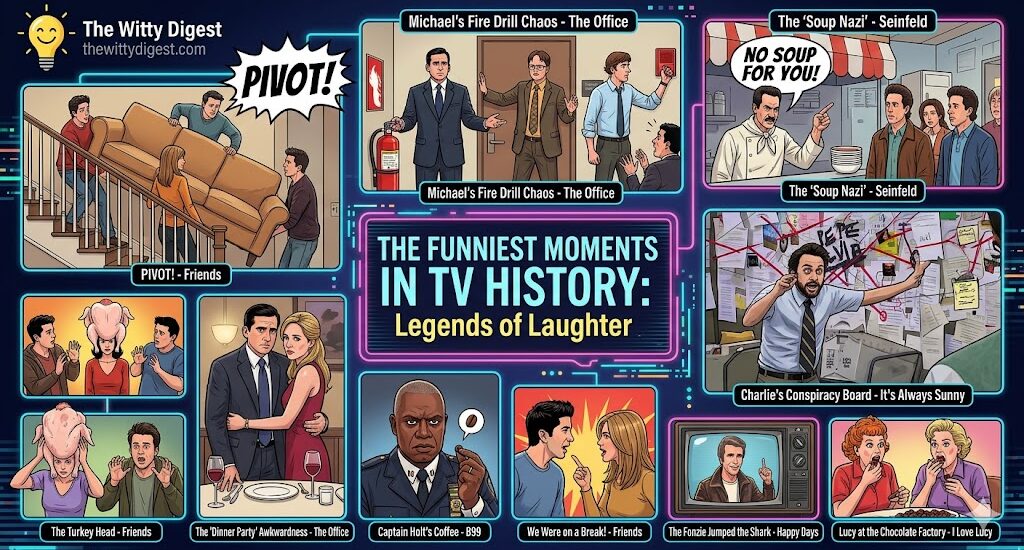
Ross Says “Pivot!” in Friends


One of television’s most famous comedy scenes happens when Ross, Rachel, and Chandler attempt to move a couch upstairs.
Why the Scene Became Legendary
Ross repeatedly screams:
- “Pivot!”
- “Pivot!”
- “Pivot!”
The combination of frustration, repetition, and physical comedy made the scene unforgettable.
Why Fans Still Love It
The scene perfectly captures the chaotic humor that made Friends one of the world’s most successful sitcoms.
Michael Scott’s Fire Drill in The Office


In one of the funniest episodes of The Office, Michael Scott stages a fake office fire drill that quickly turns into complete chaos.
Funniest Moments in the Scene
Employees:
- Smash windows
- Throw objects
- Panic uncontrollably
- Cause total destruction
Why It Worked So Well
The mockumentary format made the chaos feel strangely realistic and even funnier.
“Soup Nazi” in Seinfeld


The “Soup Nazi” episode became one of the most iconic sitcom moments ever created.
Famous Catchphrase
The character famously yells:
- “No soup for you!”
Why It Became Pop Culture History
The exaggerated seriousness over soup orders turned an ordinary situation into brilliant comedy.
The Turkey Disaster in Friends


Monica placing a turkey on her head became one of the strangest and funniest sitcom moments ever.
Why Audiences Loved It
The absurd visual humor combined with the cast’s reactions created unforgettable comedy.
Comedy Elements
- Physical humor
- Unexpected visuals
- Character reactions
- Holiday chaos
The “Dinner Party” Episode in The Office


This episode became famous for painfully awkward comedy.
Why It’s Considered Brilliant
The tension between Michael and Jan creates nonstop discomfort and hilarious interactions.
Most Memorable Moments
- Tiny plasma TV jokes
- Awkward dancing
- Forced conversations
- Relationship chaos
The Coffee Scene in Brooklyn Nine-Nine


Captain Holt’s serious personality created endless hilarious moments throughout the series.
Why Fans Loved the Humor
The contrast between Holt’s emotionless delivery and ridiculous situations made scenes incredibly funny.
“We Were on a Break!” in Friends


Ross repeating “We were on a break!” became one of TV’s most famous running jokes.
Why It Became Iconic
The argument lasted for years within the show and became a major part of Friends pop culture history.
Charlie’s Conspiracy Board in It’s Always Sunny in Philadelphia


Charlie’s wild conspiracy breakdown became one of the internet’s favorite comedy scenes.
Why It Went Viral
The chaotic energy and complete confusion created perfect meme material.
Comedy Highlights
- Random theories
- Fast talking
- Emotional panic
- Visual chaos
Live TV Mistakes That Became Hilarious
Live television created countless accidental comedy moments.
News Broadcast Fails
Unexpected interruptions, technical issues, and awkward reactions often become viral online clips.
Award Show Accidents
Funny acceptance speeches and unexpected mistakes create unforgettable television moments.
Sports Broadcast Humor
Commentators occasionally say unintentionally hilarious things during live events.
Why Sitcoms Dominated TV Comedy
Sitcoms became incredibly popular because they:
- Featured relatable characters
- Used recurring jokes
- Created emotional connections
- Balanced humor with storytelling
Audiences enjoy revisiting familiar comedy characters repeatedly.
The Importance of Timing in TV Comedy
Comedy timing is essential in television.
Great actors understand:
- Pauses
- Facial expressions
- Voice delivery
- Reaction timing
Perfect timing often transforms ordinary jokes into legendary scenes.
How Television Comedy Influenced Internet Culture
Many classic TV moments became:
- GIFs
- Memes
- Viral clips
- Social media reactions
Modern internet humor heavily relies on television comedy references.
Physical Comedy vs Verbal Comedy
Different TV shows rely on different humor styles.
Physical Comedy
Examples include:
- Falling
- Awkward movements
- Visual accidents
Verbal Comedy
Focused on:
- Clever dialogue
- Sarcasm
- Wordplay
- Insults
Most successful sitcoms combine both styles.
Why Audiences Love Awkward Humor
Awkward comedy became extremely popular in modern television.
Shows like The Office use:
- Social discomfort
- Cringe situations
- Silence
- Failed interactions
Audiences often laugh because situations feel painfully realistic.
The Role of Catchphrases in TV Comedy
Funny catchphrases help shows become memorable.
Examples include:
- “No soup for you!”
- “Pivot!”
- “We were on a break!”
These lines remain popular years after episodes originally aired.
The Impact of Streaming Platforms on Comedy Shows
Streaming services changed how audiences watch comedy.
Platforms like Netflix helped classic sitcoms reach new generations of viewers.
Benefits include:
- Binge watching
- Global audiences
- Easy access
- Social media sharing
Why Classic Sitcoms Remain Popular
Classic comedy shows continue attracting viewers because:
- Humor feels timeless
- Characters remain relatable
- Episodes are comforting
- Nostalgia is powerful
Shows like Friends and Seinfeld remain globally successful decades later.
TV Comedy and Emotional Connection
The funniest TV moments often work because viewers emotionally connect with characters.
Audiences laugh more when they:
- Understand relationships
- Recognize personalities
- Relate to situations
Comedy becomes stronger when combined with emotional storytelling.
The Future of Television Comedy
Television humor continues evolving through:
- Streaming platforms
- Internet culture
- AI-generated entertainment
- Interactive content
- Short-form comedy clips
Despite technological changes, strong writing and timing remain essential.
How Social Media Revived Old TV Comedy
Platforms like:
- TikTok
- YouTube
- X (Twitter)
help classic TV scenes become viral again through short clips and memes.
Younger audiences often discover old sitcoms through internet trend.
FAQs About Funny TV Moments
What is considered the funniest TV moment ever?
Popular answers include Ross yelling “Pivot!” in Friends and Michael Scott’s fire drill in The Office.
Why do sitcoms remain popular?
Sitcoms combine relatable characters, emotional storytelling, and timeless humor.
What makes TV comedy successful?
Strong writing, timing, acting, and relatable situations are essential for successful television comedy.
Why do awkward comedy scenes make people laugh?
Awkward situations feel realistic and emotionally uncomfortable, which creates humorous tension.
Are classic sitcoms still worth watching?
Yes. Many classic sitcoms remain funny and culturally influential today.
How did streaming change television comedy?
Streaming made comedy shows more accessible globally and encouraged binge watching.
Why do TV catchphrases become famous?
Catchphrases are memorable, repeatable, and emotionally connected to popular scenes.
What is the difference between sitcom and sketch comedy?
Sitcoms focus on recurring characters and stories, while sketch comedy features short unrelated comedy segments.
Final Thoughts
Television created some of the funniest moments in entertainment history. From iconic sitcom scenes and awkward workplace comedy to live TV accidents and unforgettable catchphrases, comedy television continues bringing laughter to audiences worldwide.
Shows like Friends, The Office, Seinfeld, and Brooklyn Nine-Nine proved that strong writing, talented actors, and relatable humor can create timeless entertainment that lasts for generations.
As streaming services and internet culture continue shaping modern entertainment, classic TV comedy remains more influential than ever. Funny television moments not only entertain audiences but also become shared cultural experiences that connect people through laughter.