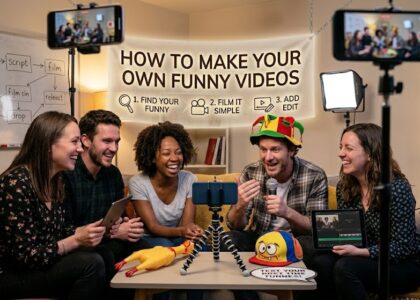

How to Create Funny Content for Social Media: A Practical Strategy
Learning how to create funny content for social media is less about becoming a professional comedian and more about learning to observe the audience precisely. People laugh when content expresses something they recognize but have not described so clearly themselves.
A generic statement such as “meetings can be difficult” offers little comic material. A more specific observation—such as attending a meeting that should have been a two-line email—creates an immediate shared experience. The joke can then exaggerate the unnecessary preparation, the number of attendees, or the complete absence of a decision.
Good social media humor combines recognition with surprise. Recognition gives the audience a reason to care, while surprise provides the payoff. That surprise may come from an exaggerated reaction, a role reversal, an unexpected comparison, or a line that reveals what the character was secretly thinking.
Humor also has to communicate quickly. Social media users may encounter the post without knowing the account, brand, characters, or previous episodes. The premise must therefore become understandable through the opening visual, spoken line, title, or on-screen text.
Platform-native production improves clarity. TikTok’s official guidance recommends thinking TikTok-first, connecting with trends, shooting vertically, leaving room for interface elements, using sound, and organizing the message around a hook, body, and close.
Originality remains important even when a trend inspires the post. Instagram publishes original-content guidance, and its recommendation updates have increasingly emphasized rewarding original creators rather than accounts that repeatedly aggregate other people’s work.
A reliable comedy content strategy therefore combines five skills: audience observation, joke structure, brand consistency, platform-aware production, and performance analysis. The sections below turn these skills into a repeatable workflow.
Understand Why Funny Social Content Works
Humor changes the emotional rhythm of a feed. It can interrupt a sequence of promotional posts, make an educational idea easier to remember, and give audiences a low-pressure reason to interact with a brand.
However, humorous content succeeds only when the audience understands both the situation and the intended tone. A joke can be technically clever and still fail because the reference is too obscure, the setup requires too much explanation, or the audience does not share the assumed experience.
Recognition is therefore more important than complexity. A familiar customer frustration, workplace habit, product problem, or industry cliché gives the joke an immediate foundation. Viewers do not need to be convinced that the situation matters because they have already experienced it.
Humor can also perform different strategic roles. Some posts are designed for reach and sharing. Others build community by expressing an insider truth. A humorous product demonstration may reduce resistance by making the sales message entertaining, while a self-aware brand post may make the organization feel more human.
The style should match the objective. An absurd sketch may attract broad attention but communicate little about a specialized service. Dry observational humor may receive fewer immediate reactions but strengthen recognition among a highly relevant professional audience.
The strongest posts generally focus on one emotional response. They do not attempt to be funny, educational, promotional, inspirational, and controversial at the same time.
Before creating the joke, define what the audience should recognize and what action the humor should support. This decision improves the premise, format, call to action, and measurement plan.
Relatability Gives the Joke a Foundation
Relatable humor begins with a specific audience truth. Instead of writing “customers ask many questions,” identify the exact recurring moment: a customer asking whether a service can be completed immediately after delaying approval for three weeks.
Build an observation bank from customer-support conversations, sales calls, reviews, comments, internal meetings, frequently asked questions, and industry discussions. Remove personal details and record the underlying pattern.
A useful observation should contain a person, situation, expectation, and tension. For example: “A client says the design should feel simple, then provides twelve conflicting references.” This creates a recognizable setup and a clear opportunity for exaggeration.
Specificity increases shareability because viewers can associate the situation with a friend, colleague, or personal experience. The post becomes socially useful: it says something the viewer wants to send to another person.
Avoid making one identifiable customer the joke. Combine several experiences into a fictional or generalized scenario. This protects privacy and makes the premise more universal.
Once the observation is clear, select one comic direction. Exaggerate the number of references, dramatize the designer’s internal reaction, or contrast the calm client message with the chaotic project board.
Surprise Creates the Payoff
Relatability establishes the situation, but surprise creates the comic payoff. The audience should understand the direction of the scene without predicting the exact ending.
Exaggeration increases the scale of an ordinary reaction. A creator who receives one revision request might respond as though preparing for a military operation. Contrast places two incompatible elements together, such as a polished corporate voice-over describing a visibly chaotic process.
Misdirection encourages viewers to expect one conclusion before revealing another. Reversal changes the expected power relationship: the beginner confidently advises the expert, or the product behaves as though it is judging the customer.
Literal interpretation turns a familiar phrase into a visual action. “Circle back” might become characters physically walking in circles before returning to the same discussion.
The surprise must remain connected to the setup. Random behavior may attract attention but is harder to understand, remember, and reproduce consistently.
A useful test is whether the punchline feels both unexpected and logical after it appears. The viewer should think, “I did not predict that, but it fits perfectly.”
Do not extend the scene after the strongest moment. Additional explanations, reactions, or promotional lines can weaken the ending. When possible, finish immediately after the punchline or allow one short silent reaction to complete it.
Define Your Comedy Voice and Boundaries
A comedy voice is the consistent way an account observes situations and expresses humor. It determines whether the brand sounds warm, dry, chaotic, understated, playful, sarcastic, absurd, clever, or self-aware.
Without a defined voice, trend-driven content can make the account feel unstable. One post may sound like a trusted adviser, the next like an aggressive meme page, and the next like a completely different creator. Even individually successful posts may fail to build a recognizable identity.
Begin by selecting three traits the humor should express. A financial-education brand might choose intelligent, reassuring, and lightly self-deprecating. A youth-oriented food brand might prefer energetic, exaggerated, and playful. These traits influence vocabulary, acting, editing, music, and the type of joke being made.
Next, document subjects that are appropriate and subjects that require caution. Shared frustrations, industry habits, product misunderstandings, internal processes, and harmless customer expectations often provide safe material. Health conditions, personal appearance, trauma, protected characteristics, private information, and serious financial hardship require considerably greater care.
A defined voice does not eliminate experimentation. It provides a filter that helps the team adapt trends without losing credibility.
Create examples of phrases the brand would use and phrases it would avoid. This is particularly helpful when content is created by several employees, freelancers, influencers, or agency partners.
The final step is to define what humor should accomplish. It may make education more approachable, humanize the company, increase sharing, introduce a product benefit, or strengthen community identity. That purpose should guide every creative choice.
Building these guidelines becomes easier when you understand comedy marketing principles that help brands use humor without losing consistency or credibility.
Match Humor to Your Brand Personality
Humor should strengthen the reason people follow the account. A legal-services brand may use understated observations about complicated paperwork. A restaurant may dramatize the emotional importance of a popular menu item. A software company can exaggerate the frustration created by the inefficient process its product replaces.
Write a short voice statement that can guide every post:
“Our humor is observant, helpful, and slightly exaggerated. We joke about shared industry problems and our own habits, not about individual customers.”
The statement should describe tone, subject, and boundaries. A useful guide might also include sample captions, approved vocabulary, editing references, and examples of jokes that feel too harsh or unrelated.
Self-aware humor is often valuable because the brand accepts some of the comic risk. A company can acknowledge its confusing terminology, overly enthusiastic team members, or harmless internal rituals.
However, self-deprecation should not undermine essential trust. A cybersecurity firm should not joke that it regularly loses customer data, and a healthcare brand should not suggest that it ignores safety standards.
The humor should remain compatible with the brand’s expertise. The audience may appreciate a lighter tone, but it still needs to believe that the organization understands its work and takes important responsibilities seriously.
Create a Simple Brand-Safety Check
Before publication, review both the intended meaning and the possible unintended interpretation. Humor often depends on ambiguity, so a second person should examine the post without receiving an explanation.
Ask who or what is the target of the joke. Shared systems, frustrating processes, powerful institutions, and the brand itself are generally safer targets than vulnerable individuals or customers with limited power.
Check whether the joke depends on humiliation, stereotypes, private details, physical characteristics, health conditions, financial hardship, or cultural references the team does not understand fully.
Review product claims as carefully as the punchline. A humorous exaggeration can still create a misleading advertising message when it implies guaranteed performance, health benefits, savings, or results that the business cannot support.
Sponsored posts also require clear disclosure. The FTC states that material relationships include financial, employment, personal, and family connections, as well as free or discounted products. The disclosure should be hard to miss, placed with the endorsement, and included within a video rather than only in its description.
Finally, review captions, background screens, documents, faces, locations, and notifications for private information. Comedy does not remove the need for consent, confidentiality, and responsible publishing.
Find Funny Ideas Consistently
Waiting to feel inspired is not a dependable comedy content strategy. Professional teams need a system that turns audience knowledge, trends, internal experiences, and performance data into a continuous supply of premises.
Create an idea database with fields for observation, target audience, potential format, comic device, business relevance, production difficulty, and status. This prevents ideas from being lost in group chats and helps the team compare simple concepts with expensive sketches.
The observation should come before the format. Starting with “we need to make a meme” often produces generic content because the team is searching for words to fill an existing template. Starting with “customers always underestimate this part of the process” creates several possible executions.
Schedule a short weekly idea session. Review customer questions, comments, sales objections, product reviews, employee experiences, industry news, trending formats, and previous performance data. Select observations that are specific, recognizable, and connected with the content strategy.
Separate evergreen ideas from time-sensitive trends. Evergreen situations can be developed carefully and reused in different formats. Trend-based posts need faster decisions and should be discarded when the cultural moment has passed.
A useful idea should be explainable in one sentence. When the team needs several paragraphs to describe why the premise is funny, the final post may also be too complicated.
Prioritize concepts that can become series. A single customer frustration may support several posts when the format remains consistent and the situation changes.
Finally, maintain a rejection list. Recording why ideas were declined—too offensive, too obscure, too expensive, too similar, or legally risky—improves future decision-making.
Mine Everyday Situations for Premises
The most sustainable humor often comes from ordinary moments rather than major events. Customers, employees, and professionals repeat similar behaviors every day, creating a large supply of recognizable material.
Review frequently asked questions, customer-support tickets, sales objections, product reviews, onboarding problems, meeting notes, and comment sections. Identify patterns rather than copying an individual person’s words.
Use structured prompts:
- “What customers think happens versus what actually happens”
- “The moment you realize…”
- “Every team has one person who…”
- “Nobody warns you about…”
- “POV: You finally…”
- “What I say professionally versus what I think”
- “The beginner, intermediate, and expert version of…”
Turn the observation into a sentence with tension. “People delay sending materials” is too general. “The client asks why the launch is late while the required files are still in their drafts” creates a clearer comic problem.
Then choose one device. Exaggerate the delay, show an impossible search for the files, or contrast the professional reply with the creator’s internal monologue.
Protect privacy by changing identifying details and combining multiple experiences. The objective is to express a shared pattern, not publicly punish a specific customer, colleague, or employee.
Use Trends as Templates, Not Finished Ideas
A social media trend provides a familiar sound, structure, phrase, editing rhythm, character type, or visual convention. Familiarity reduces the amount of explanation required, but the brand must still contribute an original observation.
TikTok describes trends as templates for creativity and provides a Creative Center where marketers can explore trend stories, hashtags, ads, and other inspiration. Its guidance encourages creators to interpret trends through brand-relevant messages rather than copying the surface format without purpose.
Before adopting a trend, check whether the audience understands it, whether the trend remains active, and whether the brand can add a meaningful perspective. A late or forced trend can make the account look disconnected rather than current.
Separate the underlying structure from another creator’s execution. You may use the idea of “expectation versus reality” without copying their dialogue, footage, costume, caption, or specific punchline.
Research the original context of audio and phrases. A sound that appears harmless may be associated with a serious event, explicit subject, or community meaning the brand has misunderstood.
Trends should support the content plan rather than replace it. A balanced calendar combines timely formats with evergreen series that remain recognizable after the trend disappears.
Write and Produce the Joke
A strong premise can be weakened by an unclear script or overloaded production. Funny social media content works best when viewers can quickly identify the characters, situation, expectation, and change.
Begin with a one-sentence premise. For example: “A social media manager receives a request to make a post viral without being given a goal, audience, or offer.” This sentence keeps the script focused and prevents unrelated jokes from entering the scene.
Write the shortest version first. Include the opening hook, the essential information, one escalation, the punchline, and an optional final reaction. Additional lines should remain only when they improve clarity or increase the payoff.
Read the script aloud. Written dialogue often sounds too formal when performed. Replace complete marketing sentences with the shorter phrases people would naturally say.
Plan visual information separately from spoken information. If a screenshot, costume, facial expression, or on-screen label already explains the situation, the dialogue does not need to repeat it.
Production should serve the joke. Expensive cameras and complex sets cannot rescue a weak observation, while a clearly performed premise may work with a phone, natural light, and readable captions.
If you’re refining your production process, reviewing a practical funny content workflow can provide additional ideas for turning relatable observations into platform-ready videos and posts.
The following table compares practical formats according to their creative purpose and production requirements.
| Format | Best Use | Basic Structure | Production Need |
|---|---|---|---|
| POV video | Relatable situations | Context → behavior → reaction | One performer and captions |
| Expectation vs. reality | Product or workplace humor | Ideal version → actual version | Two contrasting clips |
| Reaction video | Commentary and trends | Context → reaction → comic line | Expressive performance |
| Recurring character | Building a recognizable series | Character → new problem → familiar response | Consistent styling or behavior |
| Meme or image post | Fast topical humor | Recognizable structure → specific caption | Original or licensed visual |
| Mini sketch | Story-driven comedy | Setup → escalation → punchline | Several shots or characters |
Use a Hook, Premise, and Punchline
The hook tells viewers what kind of situation they are entering and why they should continue. It may be a spoken statement, unusual visual, text overlay, question, conflict, or recognizable character.
TikTok’s official Creative Codes recommend a hook-body-close structure. The hook uses suspense, surprise, or emotion; the body communicates the message; and the close completes the intended action or takeaway.
A simple comedy script might be:
- Hook: “Every marketing team has received this message.”
- Premise: A manager says, “Can you make this go viral?”
- Escalation: The creator opens a brief with no audience, budget, offer, or deadline.
- Punchline: “Perfect. I’ll press the viral button.”
- Reaction: A silent stare at the camera.
Avoid placing several premises in one short video. When the post begins about client revisions, changes into a joke about office coffee, and finishes with a product promotion, none of the ideas receives enough attention.
The punchline should resolve or reframe the premise. Do not explain it in the caption unless the explanation adds a separate insight.
End confidently. Continuing after the strongest line often reduces the impact because the audience has already received the payoff.
| Marketing Goal | Recommended Content Format | Why It Works | Best Platforms |
|---|---|---|---|
| Increase Reach | Meme posts, POV videos | Easy to share and quickly understood | Instagram, TikTok |
| Boost Engagement | Reaction videos, relatable skits | Encourage comments, tags, and discussions | Instagram Reels, Threads |
| Build Brand Awareness | Recurring characters, branded comedy series | Makes the brand memorable over time | TikTok, YouTube Shorts |
| Educate with Humor | Expectation vs. Reality, humorous explainers | Simplifies complex topics while entertaining | LinkedIn, YouTube Shorts |
| Drive Product Interest | Product demonstration with comedy | Shows benefits without sounding overly promotional | Instagram Reels, TikTok |
Improve Timing Through Editing
Comic timing controls when information appears, how long viewers wait, and when the reaction ends. Editing can sharpen timing even when the performance was recorded in one continuous take.
Remove hesitation before the hook unless the pause is intentionally part of the joke. Cut repeated words, unnecessary greetings, and explanations viewers can infer from the visual.
Use pauses strategically. A short silence before the punchline can create anticipation, while an immediate cut from a professional statement to visible chaos can strengthen contrast.
Reaction shots should be long enough to register but short enough to avoid feeling staged. Test several versions because a difference of less than a second may change how the joke feels.
On-screen text helps viewers understand character roles, locations, or internal thoughts. Keep the text brief, readable, and positioned away from interface controls. TikTok’s official production guidance recommends vertical 9:16 framing, high-resolution footage, room for the user interface, dynamic editing, text overlays, and sound.
Captions also improve access for people who watch without sound or need text support. Sound effects should reinforce the reveal rather than overpower speech.
After editing, watch once with sound and once without it. The premise should remain understandable in both conditions.
Respect Copyright and Ownership
Online availability does not mean that an image, video clip, song, television scene, photograph, illustration, or written joke is free to reuse.
The U.S. Copyright Office explains that copyright protects original works of authorship once they are fixed in a tangible form. Protected categories include photographs, illustrations, musical compositions, sound recordings, blog posts, movies, and other creative works.
Use material you created, properly licensed assets, public-domain works, or media for which you have clear permission. Platform music libraries may provide permitted uses within that platform, but terms can differ for personal, creator, commercial, and advertising accounts.
Credit does not automatically replace permission. Writing “no copyright intended” also does not create a legal right to use the material.
Fair use is a fact-specific legal doctrine, not a guaranteed exemption for short, humorous, educational, credited, or transformed posts. The Copyright Office notes that copyright law includes exceptions and limitations such as fair use, but whether a use qualifies depends on the circumstances.
Meme marketing deserves the same review. The caption may be original while the underlying photograph or film frame remains protected.
When commercial campaigns depend on substantial third-party media, seek permission, obtain an appropriate licence, or request qualified legal advice.
Related Articles
Adapt Humor for Each Platform
A strong premise can be reused across platforms, but the execution should reflect how people consume content in each environment. Reposting the same watermarked file, title, caption, and call to action everywhere may reduce clarity and make the post feel imported rather than native.
Begin by identifying what must remain unchanged. The core observation, character, and punchline usually form the central creative asset. Pacing, framing, text density, duration, title, caption, and interaction prompt can then be adapted.
Short-form video platforms generally reward immediate visual clarity. Text-first platforms depend more heavily on wording, rhythm, line breaks, and conversational replies. A professional network may require a stronger connection between the joke and a workplace insight.
The same premise can become several assets. A “meeting that should have been an email” idea might become a TikTok sketch, an Instagram carousel, a Threads observation, a LinkedIn story, and a YouTube Short with a searchable title.
Do not assume that every platform needs every idea. A subtle text joke may lose its rhythm when performed as a video, while a visual reaction may become confusing as a written caption.
Review current platform policies and native tools before production. Features such as audio availability, trial distribution, remixing, collaboration, duration, and monetization can change.
Platform adaptation is not only a technical requirement. It is a creative opportunity. Each version can emphasize a different part of the same observation, allowing the team to test which framing creates the strongest response.
TikTok, Reels, and YouTube Shorts
TikTok favors content that feels native to its visual and cultural environment. Its official Creative Codes recommend vertical 9:16 production, room for interface elements, trends, sound, visual stimulation, and a hook-body-close structure.
For Instagram Reels, prioritize original content, readable on-screen text, a clear opening visual, and a caption that adds context rather than repeating the entire video. Instagram publishes original-content guidance and offers Trial Reels, where available, to let creators test content with non-followers before deciding whether to share it more widely.
For YouTube Shorts, the title should accurately represent the video and place the most important words near the beginning. YouTube advises creators to keep titles succinct and avoid misleading viewers, because inaccurate expectations can cause people to stop watching and may affect discoverability.
Remove watermarks when exporting your own content for another platform. Reframe text so interface buttons do not cover important words.
The opening may also change. TikTok might begin with dialogue, Reels with a visual expression and text overlay, and YouTube Shorts with a title-style spoken statement.
Preserve the joke while adapting its presentation.
Threads, LinkedIn, and Text-First Posts
Text-first humor depends on wording, rhythm, punctuation, and the reader’s ability to imagine the situation. Without acting or editing, the language must establish both setup and tone.
Useful formats include short observations, fake conversations, escalating lists, internal monologues, professional-versus-honest translations, and deliberately formal descriptions of absurd situations.
Threads is designed around sharing thoughts and joining conversations based on interests. Its creator guidance emphasizes conversation and community participation, making replies and follow-up jokes an important part of the post rather than an afterthought.
On LinkedIn, humor generally works best when it remains connected to work, leadership, customers, hiring, meetings, professional identity, or industry behavior. A serious brand can use dry understatement without becoming casual in every communication.
Use line breaks to control timing. A final line can function as the punchline when it changes the meaning of the earlier sentences.
Do not copy another writer’s viral text post word for word. Adapt the broader format to an original observation and write it in the established brand voice.
Monitor replies because text humor can be interpreted differently without vocal tone. Clarify genuine confusion, but avoid explaining every joke to people who simply did not prefer it.
Measure and Improve Funny Content
Humorous content should be evaluated as a creative system rather than judged by one post. A joke may underperform because of the premise, opening, timing, production, publishing time, audience fit, or distribution—not because humor is unsuitable for the brand.
Define the objective before publishing. A reach-focused video should be assessed through discovery, retention, and shares. A community post may be more successful when it produces relevant comments and conversations. A product-focused joke should still communicate the product benefit accurately.
Compare similar formats rather than unrelated posts. A short reaction video should not be evaluated against a detailed educational carousel using only total likes.
Review both quantitative and qualitative evidence. Metrics show what people did, while comments and messages provide clues about why they responded.
Create a testing log containing the premise, hook, length, format, platform, publishing date, call to action, key metrics, audience response, and creative lesson.
Do not change every element between tests. When the script, actor, format, editing style, caption, and posting time all change, the team cannot identify which decision influenced performance.
Evaluate trends over several posts. Humor is variable, and one unusually successful or unsuccessful post can distort the strategy.
The objective is not to discover one permanent formula. Audience expectations and platform culture evolve. The goal is to build a reliable learning process that identifies repeatable structures while leaving room for creative experimentation.
Track Signals Beyond Likes
Likes provide a quick reaction but rarely explain whether the joke held attention, encouraged sharing, or strengthened the intended audience relationship.
For video, review early retention, average viewing duration, completion rate, and rewatches. A sharp drop at the beginning may indicate that the premise was unclear or the hook was too slow. Strong rewatches can suggest that the reveal, visual detail, or pacing rewarded a second viewing.
Shares indicate that viewers found the content socially useful, relatable, or worth associating with another person. Saves may signal that the post contained a reusable idea, reference, or format.
Read the comments. Relevant stories and “this is exactly what happens” responses confirm relatability. Confused comments may reveal missing context, while hostile responses can indicate a tone or targeting problem.
Profile visits and follower growth show whether the joke created interest in the account beyond the individual post.
For YouTube, official guidance recommends using analytics to understand how titles and thumbnails affect different audiences. Accurate packaging matters because viewers who feel misled may leave quickly.
Record audience sentiment alongside numbers. A post with high reach but widespread misunderstanding may not be a genuine creative success.
| Optimization Area | What to Review Before Publishing | Expected Benefit |
|---|---|---|
| Hook Strength | Does the first 3–6 seconds grab attention? | Higher watch time |
| Brand Consistency | Does the humor match your brand voice? | Builds audience trust |
| Platform Fit | Is the format optimized for the target platform? | Better algorithm performance |
| Originality | Is the idea unique instead of copied? | Improves credibility and engagement |
| Captions & Text | Are captions readable and easy to understand? | Better accessibility and retention |
| Call-to-Action | Does the post encourage interaction naturally? | More comments, shares, and saves |
| Performance Tracking | Have success metrics been defined before publishing? | Easier content improvement |
Turn Successful Ideas Into Repeatable Series
When a humorous format works, preserve the underlying structure rather than copying the exact joke. This approach creates familiarity without exhausting the audience.
A recurring series may include “Things clients say,” “Expectation versus reality,” “The honest product manual,” “Every office has this person,” or “What the customer sees versus what the team sees.”
Define the elements that remain consistent: character, costume, opening phrase, visual frame, music style, editing rhythm, or final reaction. Then change the situation or observation in every episode.
Series reduce creative friction because the audience already understands the format. The team can focus on finding stronger premises rather than inventing a completely new production style each week.
Test one variable at a time. Compare two hooks for the same premise, two punchline positions, or a 15-second and 25-second version.
Instagram’s Trial Reels feature, where available, allows eligible creators to share a Reel with non-followers first and review how the idea performs before broader distribution.
Do not continue a series only because one episode succeeded. Review whether later episodes maintain relevance, completion, sharing, and positive sentiment.
Document the creative principles behind the series so other team members can contribute without weakening the voice.
Quick Answer Section
This section provides a direct explanation before the article examines audience research, comedy structure, production, platform adaptation, and performance measurement.
Funny content is not created by adding an unrelated joke to a promotional message. It works when the humor develops from an audience truth. The viewer should recognize the situation before the punchline changes or exaggerates it.
The production format also matters. A joke that succeeds as a short video may need to become a concise observation on Threads or a professionally framed workplace story on LinkedIn. The central premise can remain consistent, but the pacing and presentation should change.
Originality is another essential consideration. Trends are useful creative templates, but copying another creator’s execution can weaken brand identity and introduce copyright concerns. Instagram publishes originality guidance, while TikTok describes trends as templates that brands should adapt to their communities and messages.
Humorous sponsored content must still follow advertising rules. The FTC advises creators to disclose material relationships clearly and place the disclosure with the endorsement rather than hiding it in a profile, at the end of a post, or behind a “more” button.
The following answer combines these considerations into a practical starting framework.
Quick Answer About How to Create Funny Content for Social Media
To create funny content for social media, begin with a specific situation your audience regularly recognizes. Turn that observation into a simple setup, then create surprise through exaggeration, contrast, reversal, literal interpretation, or misdirection. Deliver the premise quickly so viewers understand the joke before their attention moves elsewhere.
Use familiar formats such as point-of-view videos, reactions, expectation-versus-reality comparisons, recurring characters, mini sketches, fake conversations, and caption-led memes. Select the format that communicates the idea most clearly rather than choosing a trend first.
Write a strong hook, establish one clear comic problem, escalate it, and end shortly after the punchline. For short-form video, TikTok’s official creative guidance recommends a hook-body-close structure and platform-native techniques such as vertical framing, movement, text overlays, sound, and attention to interface-safe areas.
Adapt the execution to each platform. Use fast visual storytelling for TikTok and Reels, clear titles for YouTube, and sharper language for text-first platforms. Do not upload an identical watermarked edit everywhere.
Keep humor consistent with the brand voice. Avoid jokes that depend on stereotypes, private embarrassment, cruelty, unsupported claims, or harm to vulnerable people.
Publish several variations and review retention, completion rate, rewatches, shares, comments, saves, profile visits, and audience sentiment. When one structure works, convert it into a repeatable series rather than copying the same joke.
FAQ Section
This FAQ section addresses the practical questions that usually arise after a creator understands how to create funny content for social media. The answers focus on formats, idea generation, brand tone, trends, publishing frequency, measurement, and ownership.
The first important principle is that there is no universally successful comedy format. Audience identity, platform culture, subject matter, production quality, and the clarity of the premise all influence performance.
The second principle is that humor should remain strategically connected with the account. A funny post may attract views while bringing an audience that has no interest in the brand, product, or future content. Relevance matters alongside reach.
The third principle is that trends should be interpreted, not copied. Platform familiarity can help audiences understand the structure, but originality gives them a reason to remember the account.
The fourth principle is that measurement requires more than likes. Retention, completion, shares, saves, comments, profile visits, follower growth, and sentiment reveal different aspects of performance.
Finally, funny content remains subject to advertising, privacy, copyright, and platform rules. A joke does not remove the need for clear sponsorship disclosure or permission to use protected media. The FTC requires clear disclosure of material brand relationships, while copyright protects original photographs, music, videos, illustrations, and written works once they are fixed.
The answers below provide concise guidance while preserving these important limitations.
Frequently Asked Questions About How to Create Funny Content for Social Media
The most reliable way to create humorous posts is to begin with an audience observation, choose a recognizable format, add one clear surprise, and publish enough variations to learn what the audience consistently understands and shares.
Relatability should come before production. A simple phone video about a highly specific customer frustration may be more effective than an expensive sketch built around a generic joke.
Brands should also distinguish between humor style and business tone. A company can be trustworthy and funny at the same time, but the comedy should not undermine essential claims, safety information, confidentiality, or professional competence.
Trends can accelerate understanding because the audience already knows the structure. However, the post still needs an original insight. TikTok explicitly describes trends as creativity templates, while Instagram publishes guidelines encouraging original content.
Publishing frequency should be determined by creative quality and operational capacity rather than a universal number. Forced jokes can weaken the account’s voice.
Measurement should reflect the objective. Reach, watch time, shares, comments, saves, and conversions answer different questions.
Finally, creators should review media rights before publishing. Copyright protection applies automatically to many original photographs, songs, recordings, videos, illustrations, and written works. Licensing or permission may therefore be necessary even when the source material is widely shared online.
What type of funny content works best?
Relatable observations, expectation-versus-reality comparisons, point-of-view sketches, reactions, recurring characters, fake conversations, and industry-specific jokes are dependable starting formats.
The best choice depends on the audience and communication goal. A visual consumer brand may benefit from exaggerated reactions, while a professional service may perform better with dry workplace observations.
Prioritize situations that viewers understand immediately. A strong premise should remain clear even when someone has never seen the account before.
The format should support the observation. Use a reaction when the facial response is the joke, a comparison when the difference creates humor, and a recurring character when the same personality can encounter several related problems.
Do not judge the format from one post. Publish several variations while keeping the central structure consistent.
The best-performing format is ultimately the one that produces relevant attention, positive audience sentiment, and continued interest in the account—not simply the largest isolated view count.
How do I find funny content ideas?
Start with customer questions, reviews, comments, workplace habits, common mistakes, industry clichés, internal processes, and repeated sales objections.
Write each observation as a specific situation. “Customers are impatient” is too broad. “The customer asks for an update five minutes after approving the project” provides a clearer premise.
Apply one comic device: exaggeration, contrast, reversal, misdirection, or literal interpretation.
Keep an organized idea bank with the observation, intended audience, potential format, punchline direction, business relevance, and production difficulty.
Schedule a short weekly review instead of waiting for inspiration. Select ideas that are recognizable and easy to explain in one sentence.
Protect privacy by changing identifying details and combining experiences.
Trends may provide additional structures, but they should not become the entire idea. Use TikTok Creative Center and official platform resources to understand current patterns, then connect them with a distinct audience insight.
Can a serious brand use humor?
Yes. Humor does not require a brand to become silly, careless, or informal in every communication.
A serious organization can use dry understatement, observational humor, gentle self-awareness, professional frustrations, or carefully framed comparisons. The style should support the brand’s established expertise.
A financial brand might joke about spreadsheet habits without trivializing financial hardship. A healthcare organization can use light situational humor without making unsupported medical claims or joking about a patient’s condition.
Define the topics, language, and targets that are appropriate. Important legal, health, financial, and safety information should remain clear even when the surrounding content is lighter.
Use self-aware humor carefully. A brand can acknowledge harmless internal habits, but it should not imply incompetence in areas where trust is essential.
Review the post with someone outside the creative team. They can identify interpretations the writers missed.
The objective is not to sound like a comedy account. It is to use humor as one communication tool within a consistent and credible brand voice.
Should I use every trending meme?
No. A trend should be used only when the audience understands it, the timing remains relevant, the brand can contribute an original observation, and the format supports a meaningful message.
TikTok describes trends as templates for creativity. This means the structure may be familiar, but the execution should reflect the creator’s audience and purpose.
Research the original meaning of the sound, phrase, or visual format. A trend may carry cultural, political, explicit, or sensitive context that is not obvious from one example.
Check media rights as well. A widely shared image, television frame, or song may still be protected by copyright.
Avoid forcing a product into every trend. When the connection requires a long explanation, the audience will notice the marketing effort before the humor.
Develop evergreen series alongside trends. Trends can provide timely reach, while recurring original formats build recognition and remain useful after the cultural moment ends.
How often should I publish funny content?
There is no universal publishing frequency that suits every brand, audience, platform, or production team.
Choose a schedule that allows the team to maintain strong observations, appropriate review, and consistent production. One well-developed humorous post may provide more value than several weak jokes created only to fill the calendar.
Humor should usually form one part of a broader content mix that may include education, product information, community stories, customer proof, and direct offers.
Begin with a manageable test, such as one or two humorous posts each week, then compare formats and audience responses over a meaningful period.
Do not increase frequency based only on one viral result. Review whether the posts continue attracting the intended audience and support broader business goals.
Batch recurring formats where possible. Record several versions of a character or series during one production session.
The right frequency is sustainable, strategically relevant, and high enough to generate useful learning without making every brand message depend on a joke.
How do I know whether a joke worked?
Begin with the objective. A reach-focused joke should be assessed through discovery, retention, completion, and shares. A community post may be evaluated through relevant comments and conversations.
For video, examine where viewers leave. A sharp early drop may indicate a confusing or slow hook. Strong completion or rewatches may suggest that the pacing and reveal worked.
Shares often signal relatability because viewers want another person to recognize the situation. Saves may indicate that the post contains a reusable idea or reference.
Read the comments for understanding and sentiment. Responses such as “this happens every week” confirm the premise, while widespread confusion may indicate missing context.
Review profile visits and follower growth to determine whether people became interested in the account beyond the individual joke.
Compare similar formats and avoid conclusions from one post.
A joke worked strategically when the audience understood it, responded positively, and moved closer to the intended relationship with the account.
Can I use another creator’s meme or video?
Do not assume that a work is free to use because it appears publicly online or has been reposted many times.
The U.S. Copyright Office explains that copyright automatically protects original works once they are fixed, including photographs, illustrations, music, sound recordings, writing, and videos.
Create an original version, obtain permission, use properly licensed assets, or select public-domain material when appropriate.
Credit is courteous but does not automatically provide legal permission. A disclaimer such as “no copyright intended” does not change ownership rights.
Fair use may apply in some circumstances, but it is fact-specific. A post is not automatically fair use because it is humorous, short, educational, credited, or described as parody.
Review platform music and remixing terms, especially for commercial accounts and paid advertising.
When a campaign relies heavily on another person’s protected work, obtain appropriate legal advice or a licence before publication.
Conclusion
This conclusion turns the creative, strategic, platform, safety, and measurement guidance into one repeatable process.
The first step is audience observation. Record specific frustrations, habits, expectations, mistakes, and unspoken truths. The strongest premises usually come from moments people recognize immediately.
The second step is joke structure. Establish one situation, add one clear escalation, and use exaggeration, contrast, reversal, literal interpretation, or misdirection to create surprise.
The third step is production. Use a strong hook, remove unnecessary explanation, support clarity with captions, and edit the timing around the reveal.
The fourth step is platform adaptation. Preserve the premise but adjust the pacing, text, title, framing, sound, and interaction prompt for each network.
The fifth step is risk review. Confirm that the joke does not depend on private information, stereotypes, unsupported claims, copyrighted media, hidden sponsorships, or humiliation of vulnerable people.
The sixth step is measurement. Review retention, completion, rewatches, shares, comments, saves, profile visits, follower growth, and sentiment. Convert strong structures into repeatable series.
Humor is not entirely predictable. Even experienced creators produce jokes that receive mixed responses. A professional strategy does not eliminate that uncertainty; it creates a process for learning efficiently.
The most valuable long-term asset is therefore not one viral post. It is a recognizable comedy voice and an operating system that helps the team create, review, publish, measure, and improve original ideas consistently.
Conclusion: Build a Repeatable Humor System
The most reliable approach to how to create funny content for social media begins with audience insight rather than a trend, sound, or meme template.
Identify a specific situation people recognize. Turn it into a clear premise and create surprise through exaggeration, contrast, reversal, literal interpretation, or misdirection. Select the format that communicates the joke most efficiently.
Write a concise hook, setup, escalation, and punchline. Remove information viewers can understand from the visual, and end shortly after the strongest moment.
Adapt the execution for each platform. TikTok’s official guidance emphasizes vertical, platform-native production, trends, sound, visual stimulation, and a hook-body-close structure. YouTube recommends accurate and concise titles, while Instagram provides original-content and Reel-testing guidance.
Protect the brand by defining its comedy voice and reviewing who becomes the target of every joke. Avoid private details, stereotypes, unsupported claims, and material that trivializes serious harm.
Disclose sponsored relationships clearly. The FTC advises placing disclosures with the endorsement message and making them difficult to miss.
Use original or appropriately licensed media. Copyright may protect photographs, music, videos, illustrations, and writing from the moment they are created and fixed.
Finally, measure the work. Review retention, completion, rewatches, shares, comments, saves, profile visits, follower growth, and audience sentiment.
Turn successful structures into recurring series, but keep changing the underlying observation. This creates familiarity without repetition and converts humor from occasional inspiration into a dependable content capability.
The Most Important Takeaway
Funny content works when the audience recognizes the truth beneath the joke. The observation matters more than the production budget.
Begin with a specific moment rather than a broad subject. “Working from home” is a topic; “pretending the frozen video call was a technical problem when you stopped listening” is a premise.
Create one clear surprise. Exaggerate the reaction, reverse the roles, reveal the internal thought, or contrast professional language with visible reality.
Keep the structure simple enough to understand without a long caption. Use production, text, music, and editing to clarify the joke rather than distract from it.
Maintain a consistent comedy voice so audiences recognize not only what the account discusses but how it interprets the world.
Review safety, ownership, and disclosure before publishing.
Then test repeatedly. One post cannot reveal whether the premise, format, or voice has long-term potential.
The strongest humor strategy is not built around constant virality. It builds audience recognition, conversation, and memory through a series of relevant, original, and consistently executed ideas.
Your Next Content Step
Create a list of ten situations your audience regularly experiences. Use comments, customer questions, reviews, sales objections, workplace habits, and industry clichés as sources.
Select the most specific observation and write it as one sentence containing a person, expectation, and problem.
Choose a format: point-of-view video, expectation versus reality, reaction, recurring character, mini sketch, meme, or text post.
Write three different hooks for the same premise. Keep the setup short, include one escalation, and create one clear punchline.
Record or draft two versions with different timing. Add readable captions and remove any unnecessary explanation.
Complete the brand-safety, disclosure, privacy, and copyright review.
Publish the strongest version and record its retention, shares, comments, saves, profile visits, and audience sentiment.
Do not treat the first result as a final verdict. Use the same structure with another audience observation and compare performance.
When the format works repeatedly, define its consistent elements and turn it into a named content series.